For pilgrimage organisers helping participants understand what Lourdes is and is not, a clear grasp of the Church's theological teaching on the shrine is invaluable. Lourdes raises questions that are answered differently by different people: Are you required to believe in it? What exactly is a Marian apparition? Does the Church guarantee that the water heals? Why are the sick so central? The answers to these questions lie in a coherent theological framework that the Church has developed over centuries and applied carefully to Lourdes since Bishop Laurence's commission of inquiry in the 1850s.
Private Revelation: Approved but Not Required
Lourdes belongs to the category of "private revelation" — a term used by the Church for events in which God is believed to have communicated with specific individuals after the close of public revelation (the Scriptures and apostolic tradition). Private revelations are not articles of faith that Catholics are required to believe. The Church's approval of the Lourdes apparitions in 1862 means only that the events are "worthy of belief" — that they are not contrary to the faith, that they bear genuine spiritual fruit, and that the Church does not prohibit Catholics from making pilgrimage to Lourdes. A Catholic who has doubts about the apparitions is not in error. But the consistent fruits of 160 years of pilgrimage — healings, conversions, restored faith — are themselves a powerful argument for taking Lourdes seriously.
What "Apparition" Means Theologically
An apparition, in Catholic theology, is an event in which a spiritual reality becomes perceptible to the senses — typically visual and sometimes auditory — of a particular person or persons. It is distinct from a vision (which is purely internal) and from a hallucination (which has no corresponding reality). The Church does not claim to be able to prove that an apparition occurred by scientific means; its investigations ask instead whether the reported events are consistent with the faith, whether the person receiving them bears the marks of integrity and sincerity, and whether genuine spiritual fruit has followed. In Lourdes's case, all three criteria were judged, after four years of investigation, to be met.
Our Lady's Role: Intercessor, Not Source
A common misunderstanding about Marian pilgrimages is that they assign to Mary a role that belongs to God alone. Catholic theology is clear: Mary is not the source of grace but its channel. She is the greatest of the saints, whose intercession is particularly powerful — not because she replaces Christ as mediator, but because her union with him is uniquely complete. At Lourdes, the healings and graces that pilgrims receive are understood as gifts from God, sought through Our Lady's intercession. This distinction matters: pilgrims do not pray to Mary instead of God but ask her to intercede with God on their behalf, as one might ask a friend of the king to put in a word.
The Message: Prayer, Penance and Conversion
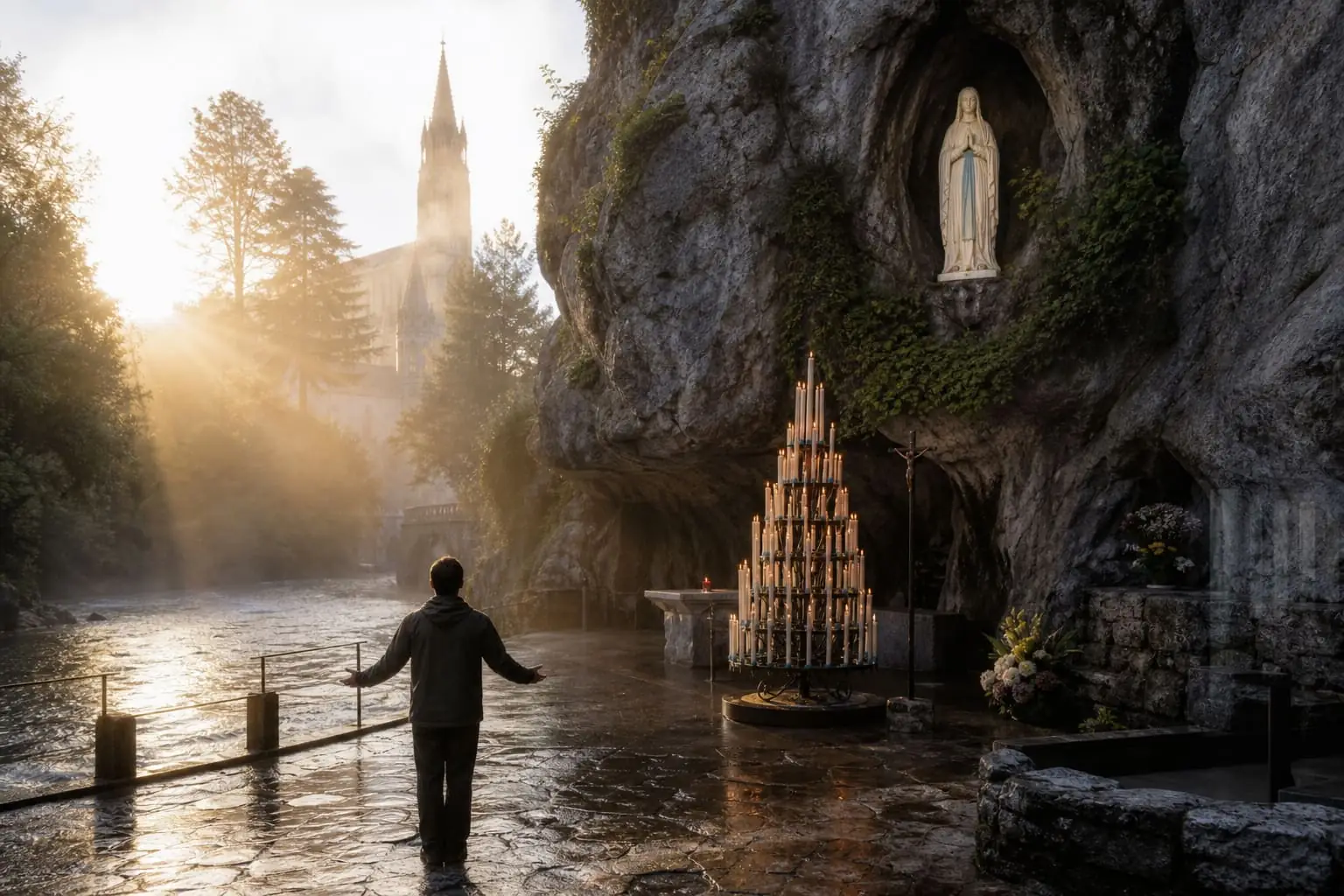
Our Lady's message to Bernadette had three elements: pray, do penance, and convert. These are not softened in the Sanctuary's presentation of Lourdes. Penance — the turning of the heart away from sin and toward God — is embedded in the Sanctuary's geography (the spring, the Grotto, the Chapel of Reconciliation). Conversion is what pilgrims report happening to them, often unexpectedly. Prayer is the constant background noise of the Sanctuary, in liturgy and in silence. The Church's approval of Lourdes is inseparable from this message: it is not approved merely as a place of possible healings but as a place that embodies a call to spiritual renewal.
The Significance of the Immaculate Conception
When Bernadette asked the Lady her name and received the response "I am the Immaculate Conception," the theological significance was enormous — and was not lost on Bishop Laurence or the Holy See. The dogma of the Immaculate Conception had been defined by Pope Pius IX just four years earlier, in 1854. A fourteen-year-old, semi-literate girl in a remote Pyrenean town had spontaneously used the precise theological formula of the dogma — a term she admitted she did not understand. For the commission of inquiry, this was among the most significant arguments for authenticity. For the Church, it meant that Lourdes was not peripheral to Catholic theology but connected to its most recent dogmatic development.
Why the Sick Are Central, Not Peripheral
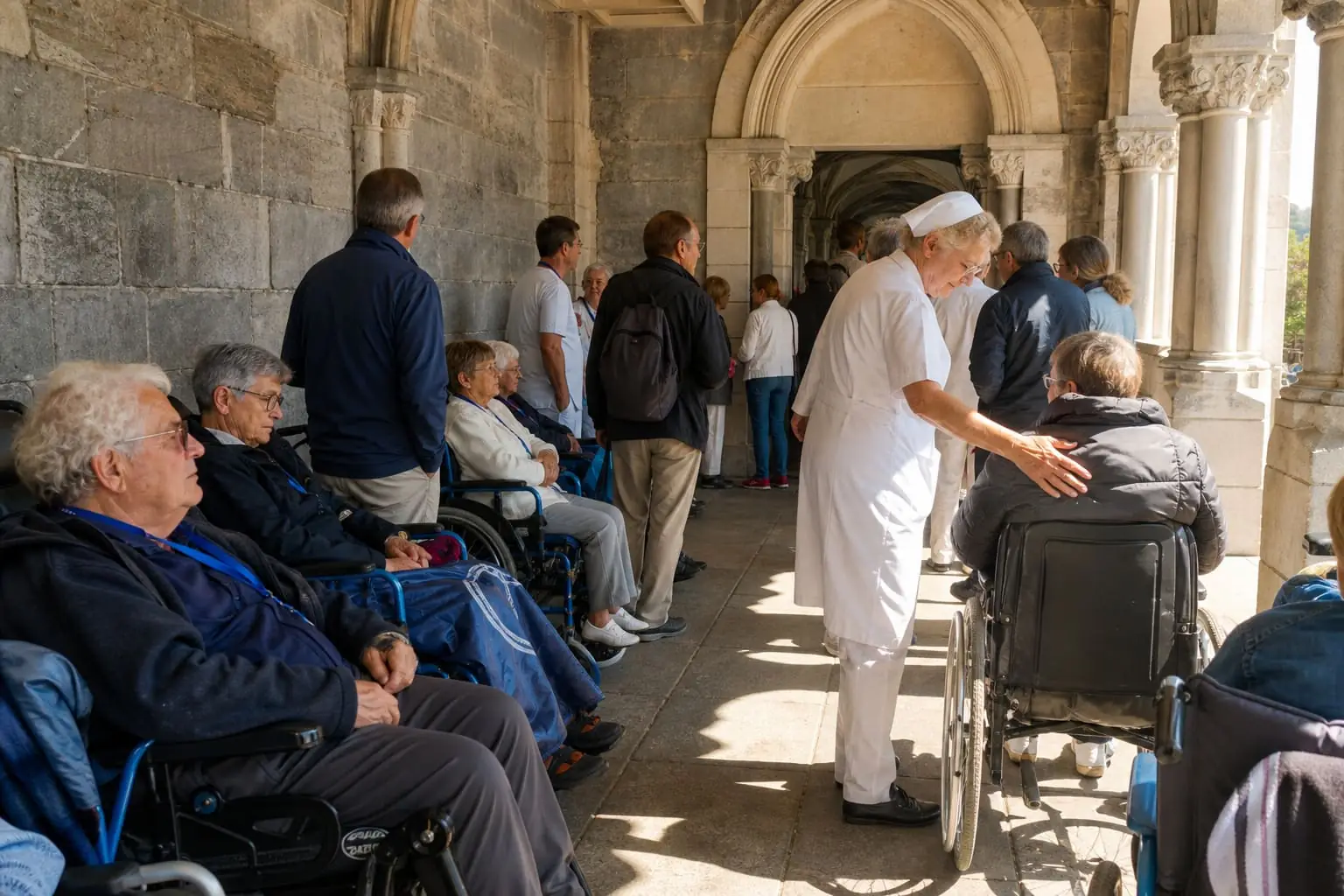
The most consistently misunderstood aspect of Lourdes is its relationship to illness and suffering. The sick are not unfortunate pilgrims who happen to be present: they are the theological centre of the Sanctuary. At the Blessing of the Sick, it is those in wheelchairs and on stretchers who occupy the front positions of honour. The Hospitalité exists to serve them. The Medical Bureau investigates their healings. This arrangement expresses a deep theological claim: that the suffering, the weak, and the poor are those through whom God most clearly acts, as they were in the life of Bernadette herself. Lourdes does not promise healing to the sick. It promises them dignity, prayer, sacrament, and the company of the Church. That is itself a form of healing.
Ready to plan your Lourdes pilgrimage?
Our team will build a personalised itinerary and send you a free quote within 1 hour.
Request Free Quote