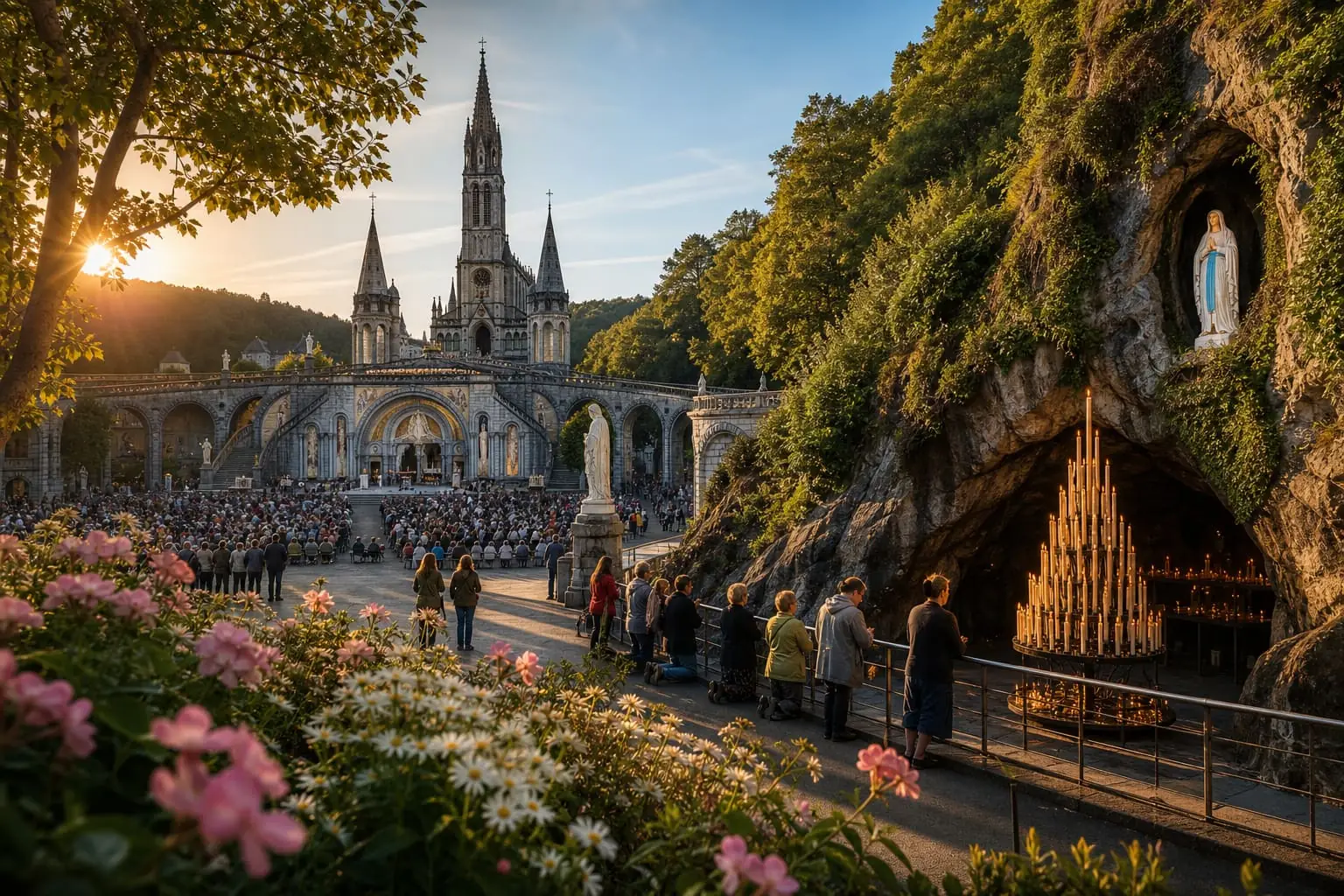
Before 1858, Lourdes was an unremarkable market town of 4,000 inhabitants at the foot of the French Pyrenees. Within a decade of that year, it had become one of the most famous places in the world, a destination of faith, healing and hope that today receives over 3.5 million pilgrims annually from more than 160 countries. The story of Lourdes is inseparable from the story of one girl: Bernadette Soubirous.
Bernadette and the Apparitions
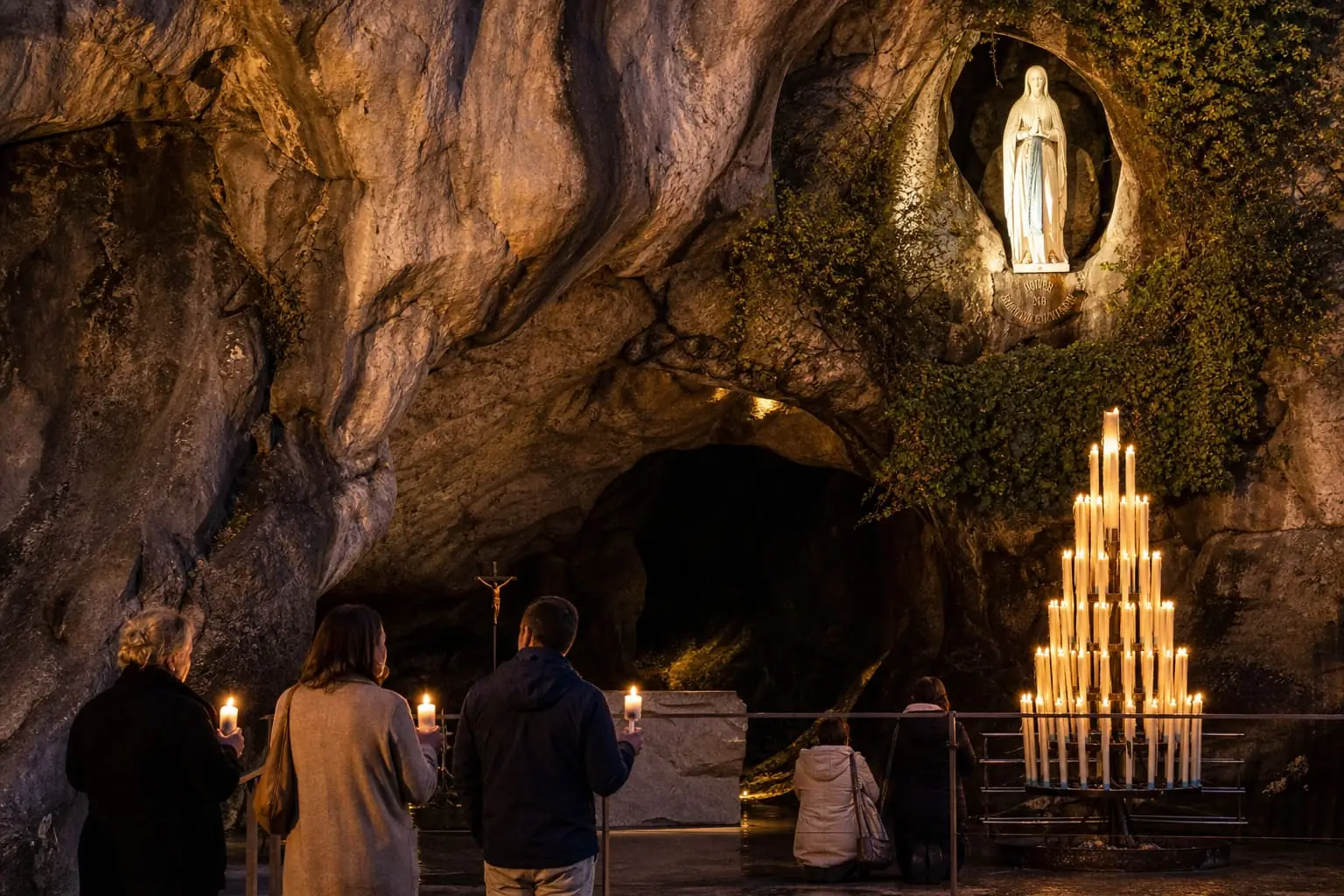
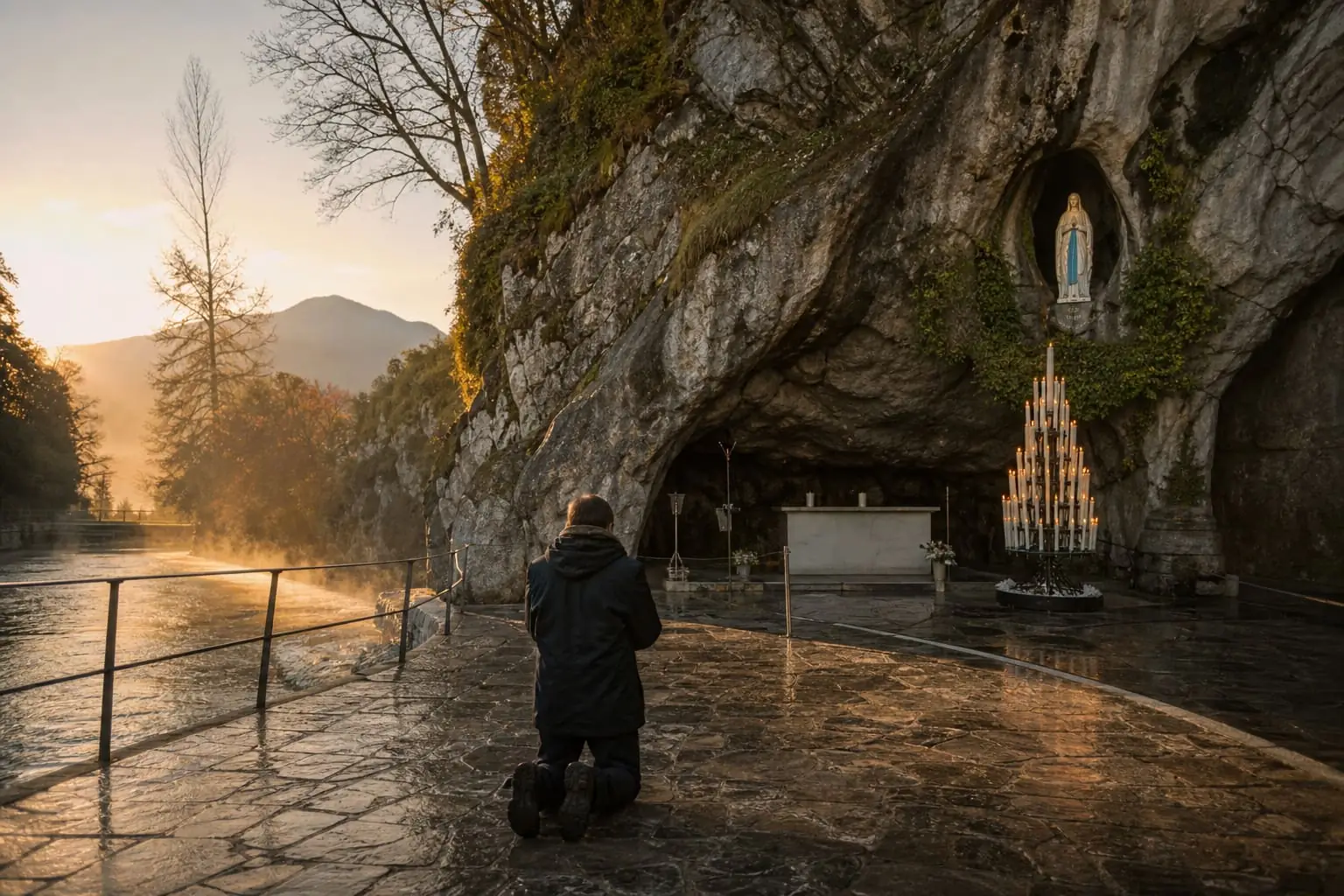
Marie-Bernarde Soubirous was born on 7 January 1844, the eldest child of a miller and his wife. By 1858, the family had fallen into poverty, living in a single damp room in a former prison called the Cachot. On 11 February 1858, 14-year-old Bernadette went to gather firewood at a wild rocky outcrop on the edge of town called Massabielle. Near a cave in the rock, she saw what she described as "a beautiful lady dressed in white", a vision that would repeat itself 18 times over the following five months. The lady eventually identified herself as "the Immaculate Conception", a theological term Bernadette, as a barely-educated girl, would have been unable to invent.
The Spring and the Healings
During the ninth apparition (25 February 1858), the lady told Bernadette to dig in the ground at the base of the cave. Bernadette scraped in the mud and a spring began to flow, initially a trickle, now producing around 35,000 litres of water per day. Almost immediately, reports of miraculous healings began to circulate. Louis Bouriette, a quarry worker who had been blind in one eye for 20 years, claimed to have his sight restored after washing with the spring water. The Lourdes Medical Bureau, founded in 1883 to investigate such claims, has since officially recognised 70 miraculous cures.
Church Approval and Construction
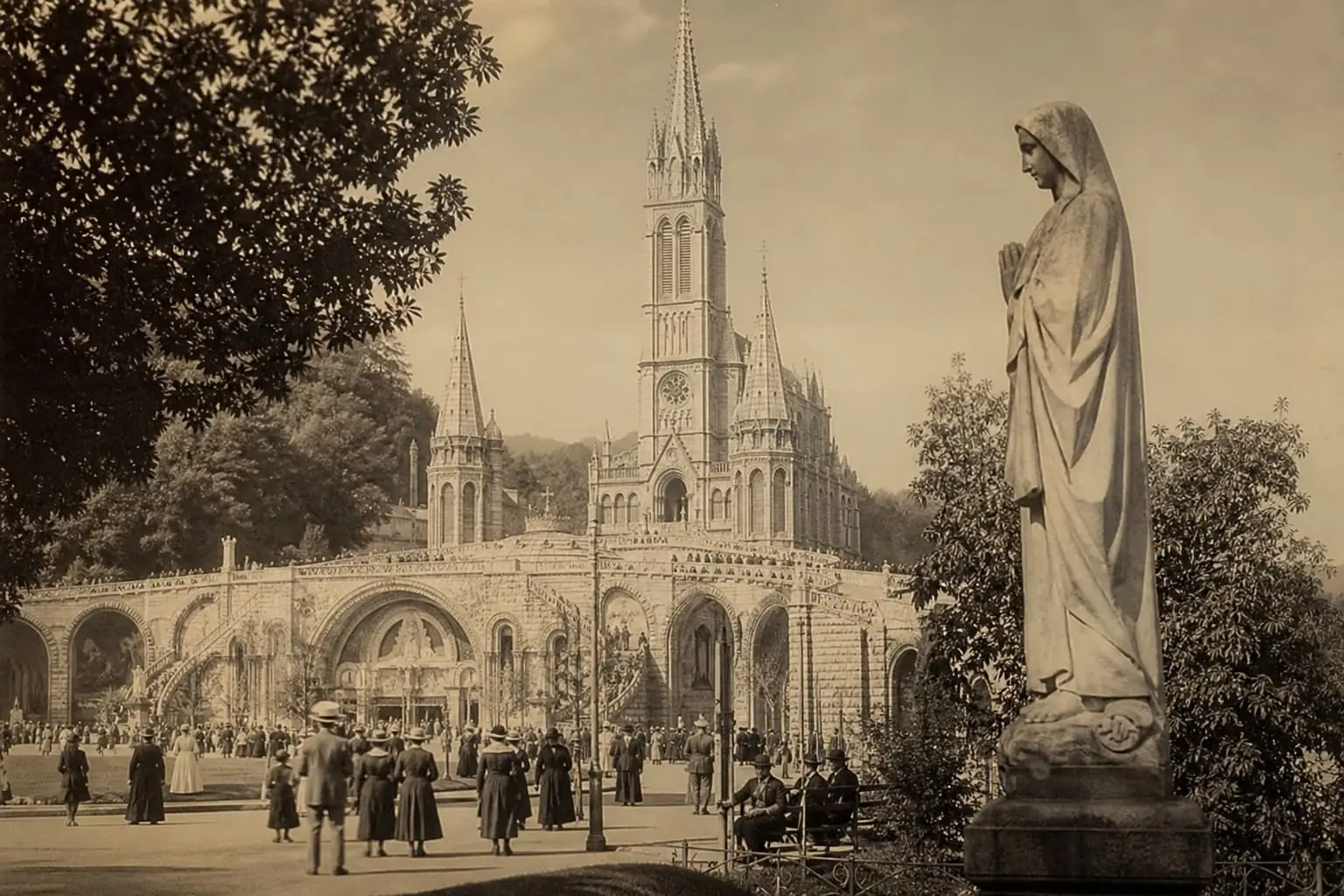
Bishop Bertrand-Sévère Laurence of Tarbes appointed a Commission of Inquiry that spent four years investigating the events before declaring the apparitions "worthy of belief" in January 1862. Construction of the first basilica above the Grotto began in 1863, and the Basilica of the Immaculate Conception was consecrated in 1876. The underground Basilica of Saint Pius X, consecrated in 1958 for the centenary of the apparitions, can hold 25,000 pilgrims and remains the world's largest underground church.
Lourdes in the Modern Era
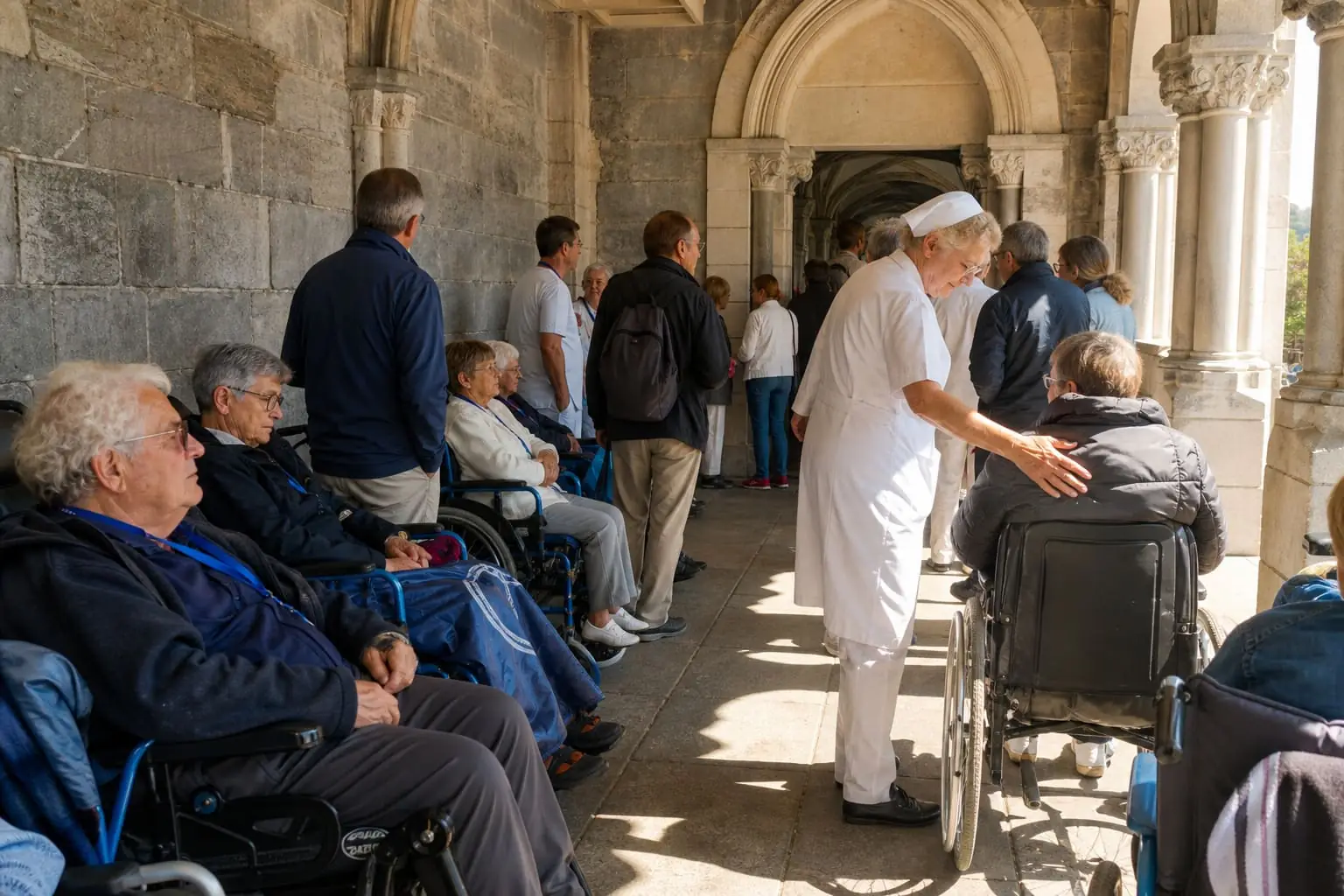
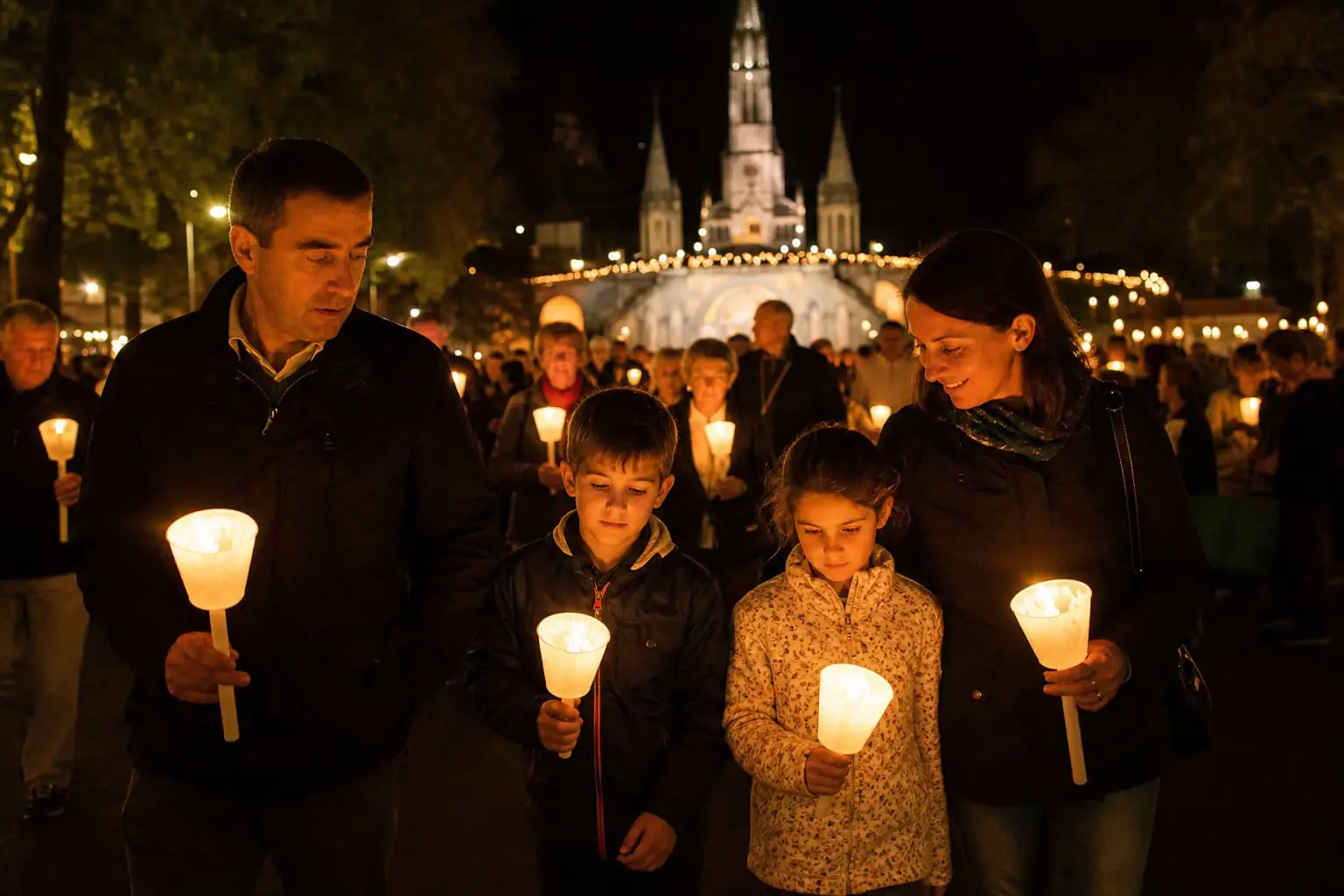
The railways reached Lourdes in 1866, transforming it from a local phenomenon to an international one. By the 1880s, national pilgrimages from Ireland, the United Kingdom and beyond were an annual fixture. The 20th century saw Lourdes grow into a fully equipped pilgrimage city, with hundreds of hotels, a dedicated Hospitalité of trained volunteers, and an internationally famous medical bureau. Pope John Paul II visited three times (1983, 1991, 2004). Today, Lourdes is the most visited Catholic pilgrimage site after Rome and Jerusalem, and the Sanctuary continues to draw pilgrims seeking healing, faith, and encounter with the presence of God.
Ready to plan your Lourdes pilgrimage?
Our team will build a personalised itinerary and send you a free quote within 1 hour.
Request Free Quote