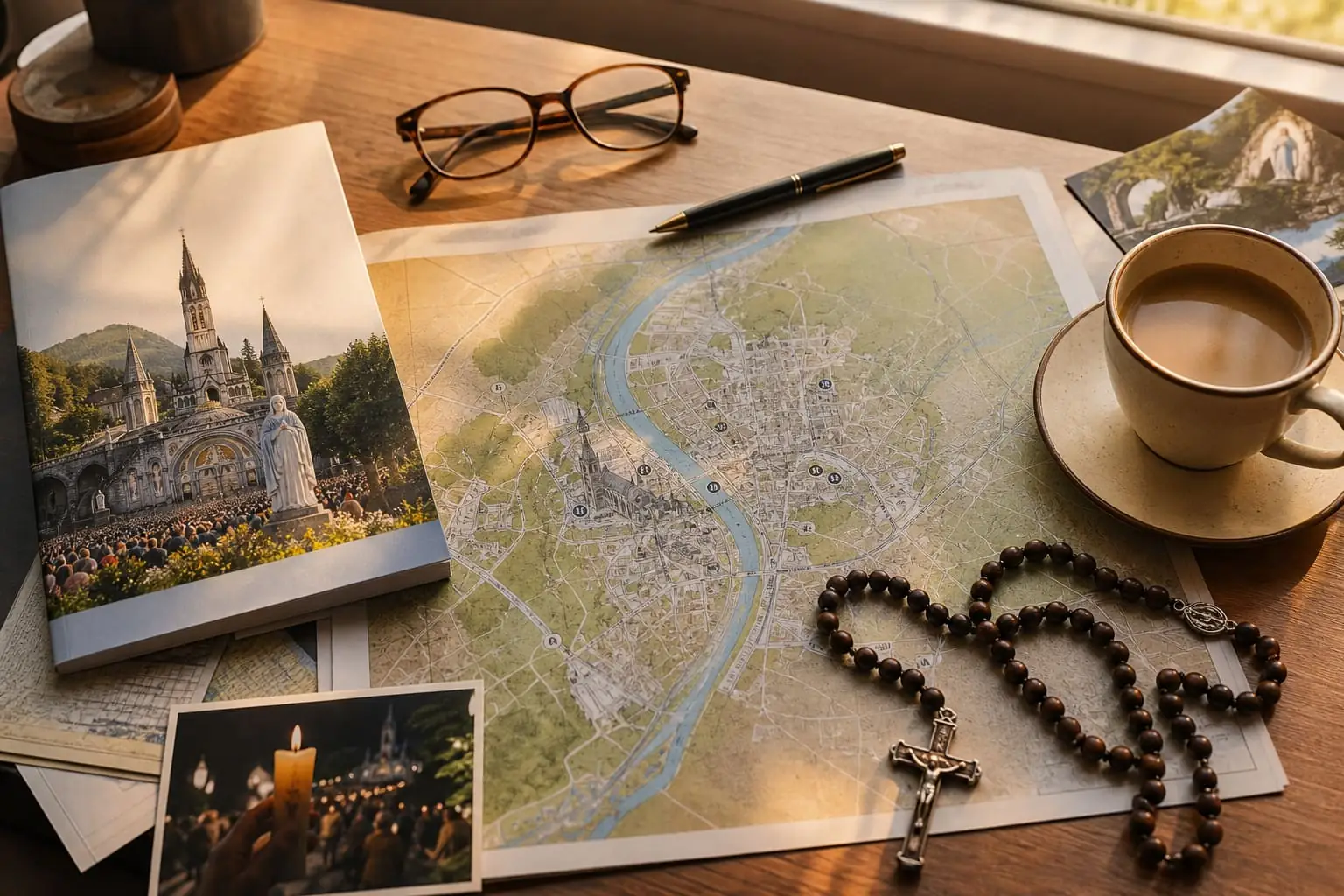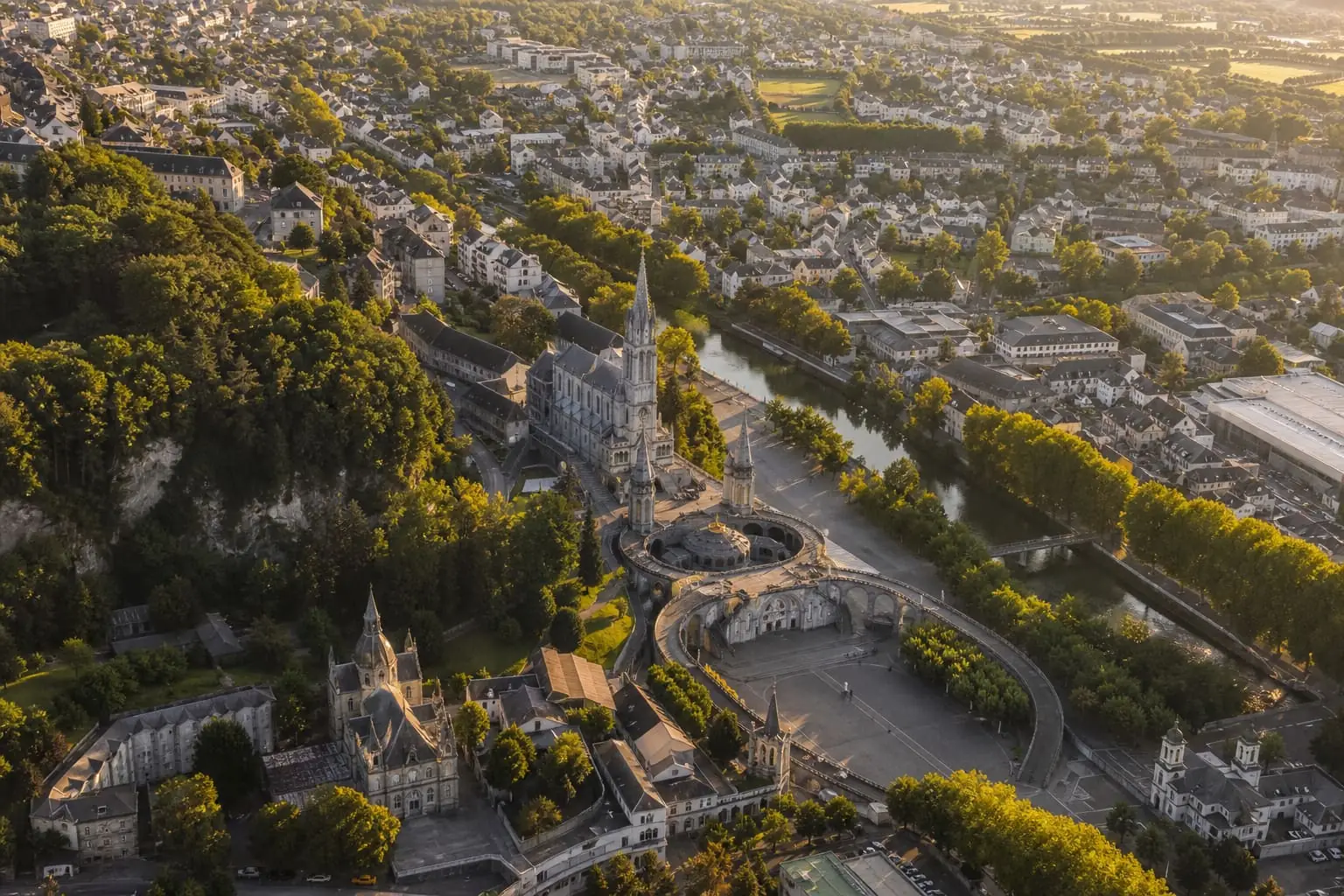
The Sanctuary Domain of Notre-Dame de Lourdes covers approximately 50 hectares on the banks of the Gave de Pau river, a ten-minute walk from Lourdes town centre. Within this domain are some of the most significant Catholic sites in the world, three basilicas, the Grotto of Massabielle, the sacred Baths, the Esplanade, the Way of the Cross, the Rosary Garden, the underground basilica, and multiple chapels and support facilities. First-time pilgrims can find the domain confusing to navigate; this guide provides an orientation to every major site and its place in the pilgrimage experience.
The Grotto of Massabielle
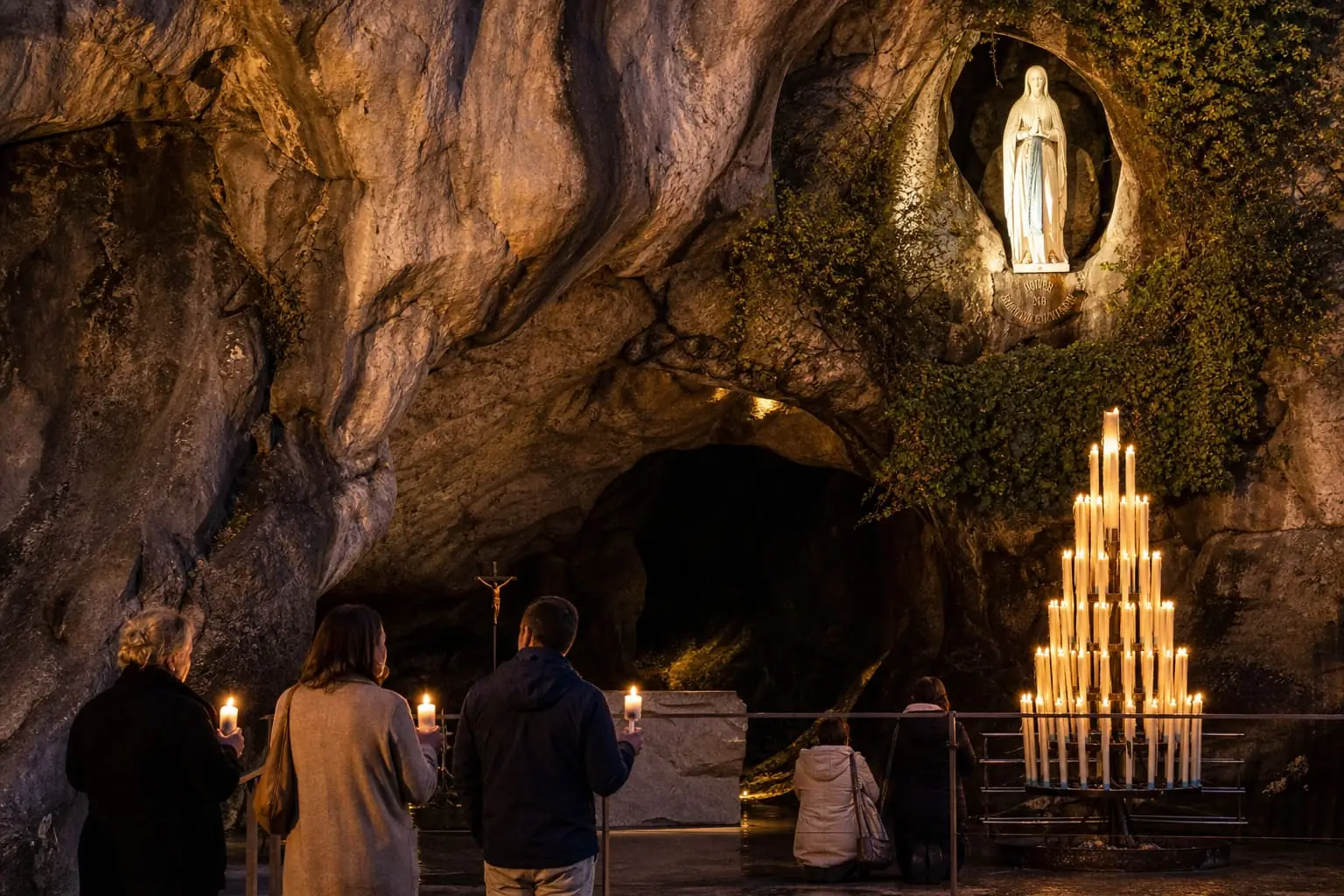
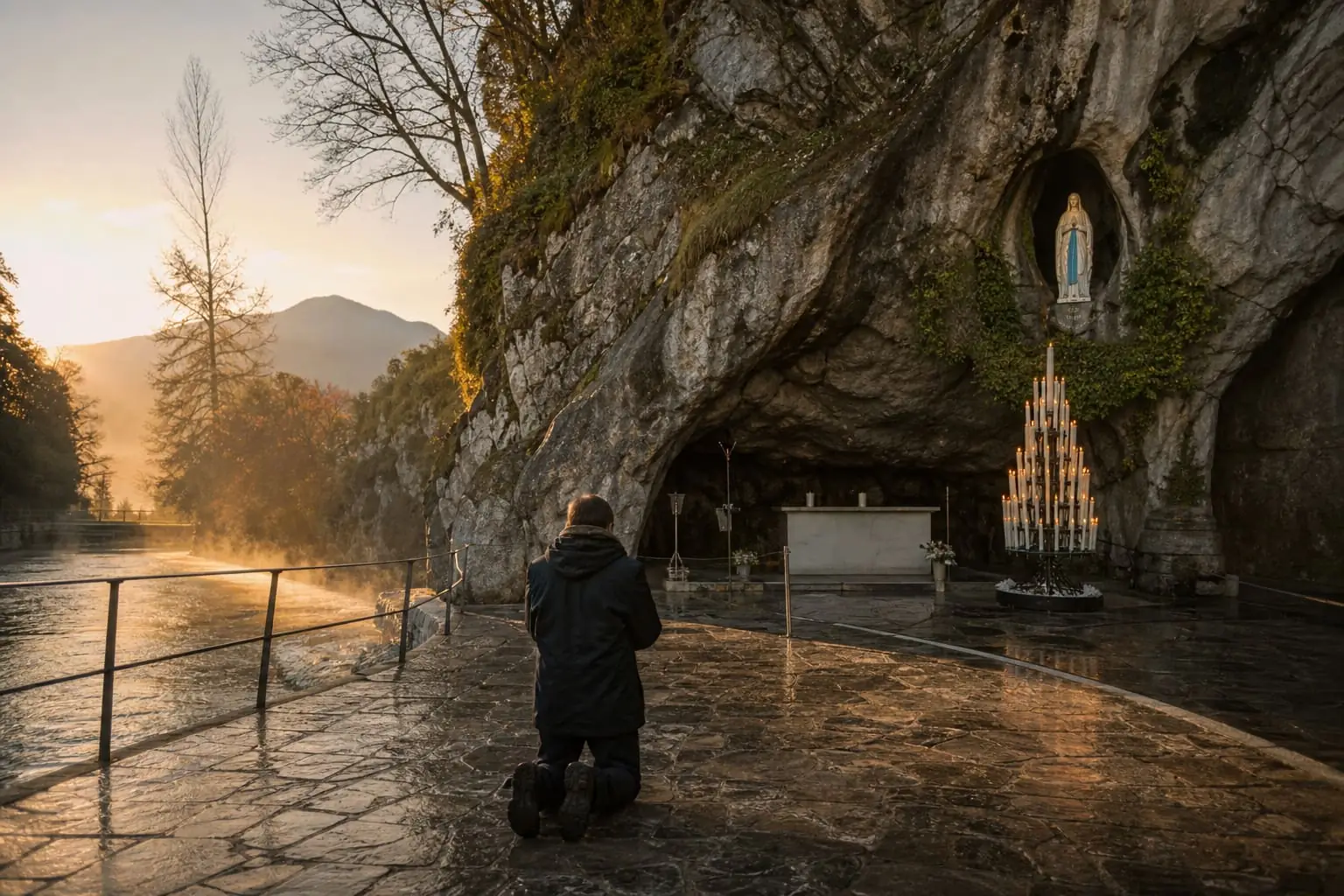
The Grotto is the heart of everything. It is the rocky cave on the bank of the Gave where Bernadette saw the apparitions, and where the spring that has flowed since February 1858 still produces approximately 35,000 litres of water daily. The cave itself is small and intimate: a niche in the rock with a statue of Our Lady positioned where Bernadette described seeing the figure, and the spring water flowing from the base of the rock. Pilgrims queue to walk through the cave, touch the rock (worn smooth by millions of hands), and kneel in prayer. The Grotto is open 24 hours a day, every day of the year. It is also the site of the outdoor Grotto Mass at 09:30 each morning in season.
The Three Basilicas
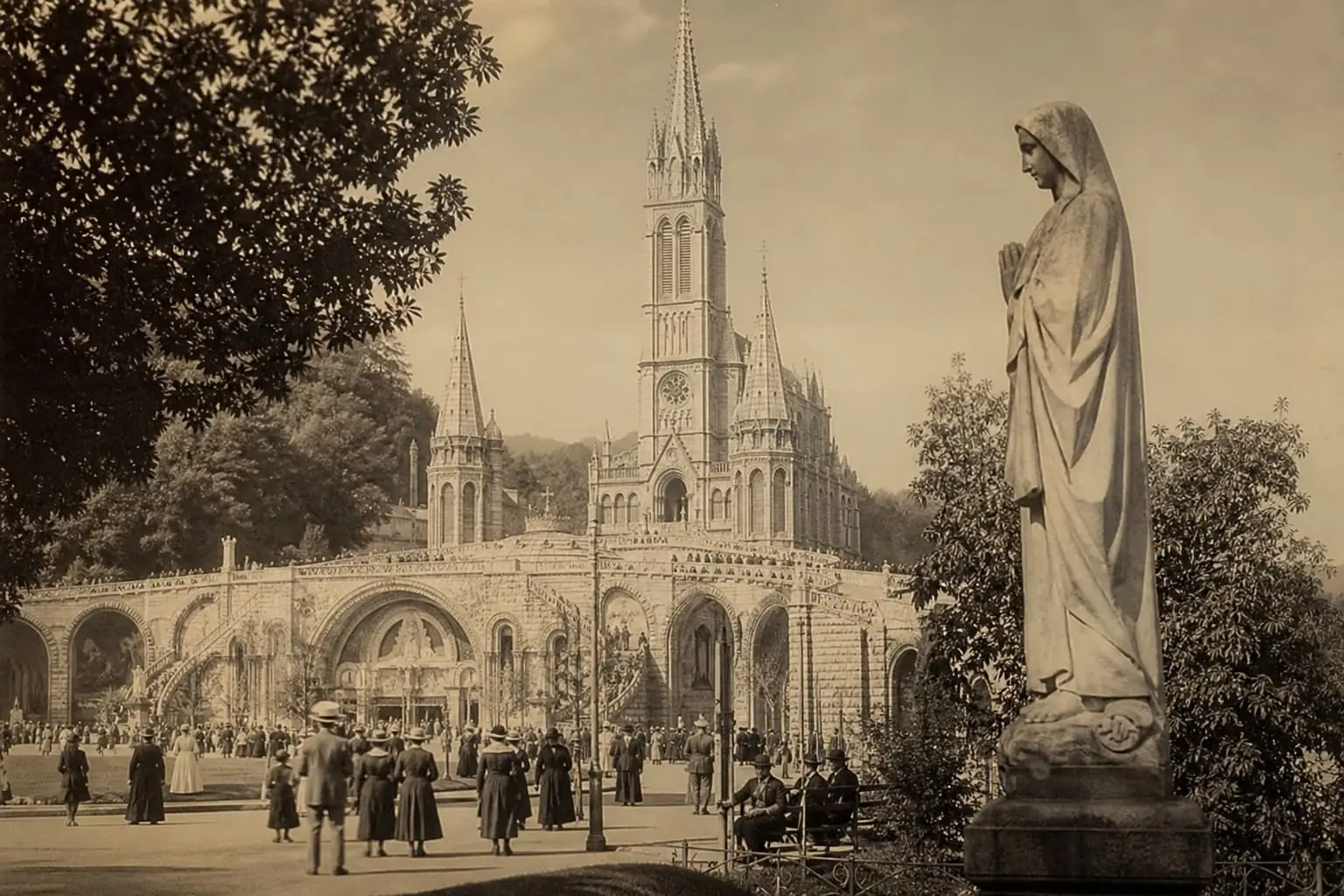
Three basilicas form the vertical centrepiece of the Sanctuary, stacked above the Grotto on the rock. The lowest is the Basilica of the Rosary (consecrated 1901), with 15 semicircular chapels arranged around its perimeter, each dedicated to one of the mysteries of the rosary and decorated with elaborate mosaic scenes. Above it sits the Crypt (consecrated 1866, the first church built at Lourdes), a long narrow underground chapel that pre-dates the Rosary Basilica and offers intimate, candlelit prayer. At the top is the Basilica of the Immaculate Conception (consecrated 1876), the iconic spired structure visible from across the domain and much of the town, its neo-Gothic interior featuring painted scenes of the apparitions. Together, the three form a vertical pilgrimage in themselves.
The Baths and the Spring Water Taps
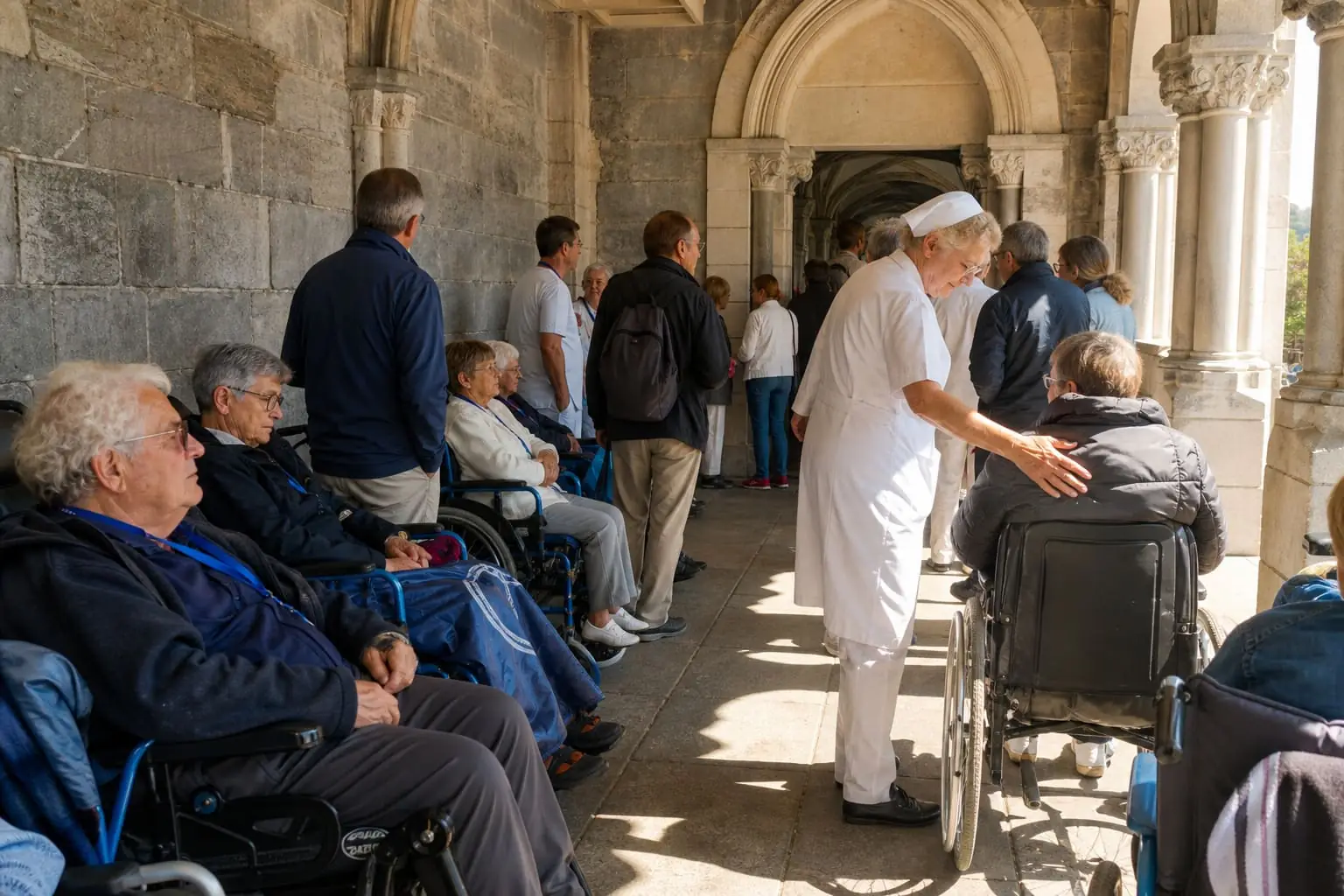
The Baths are located immediately to the left of the Grotto along the river bank, in a low stone building with separate entrances for men and women. Pilgrims are immersed in cold Lourdes spring water (12°C) by trained Hospitalité volunteers in a ceremony of prayer and intention. The Baths are free and open to everyone; opening times vary seasonally (check the Sanctuary app). Separately, spring water taps are located near the Grotto entrance, open throughout the day, where pilgrims can drink the water directly or fill containers to bring home. The spring water is the same water that flows through the Baths, drawn directly from Bernadette's spring.
The Esplanade and Processions
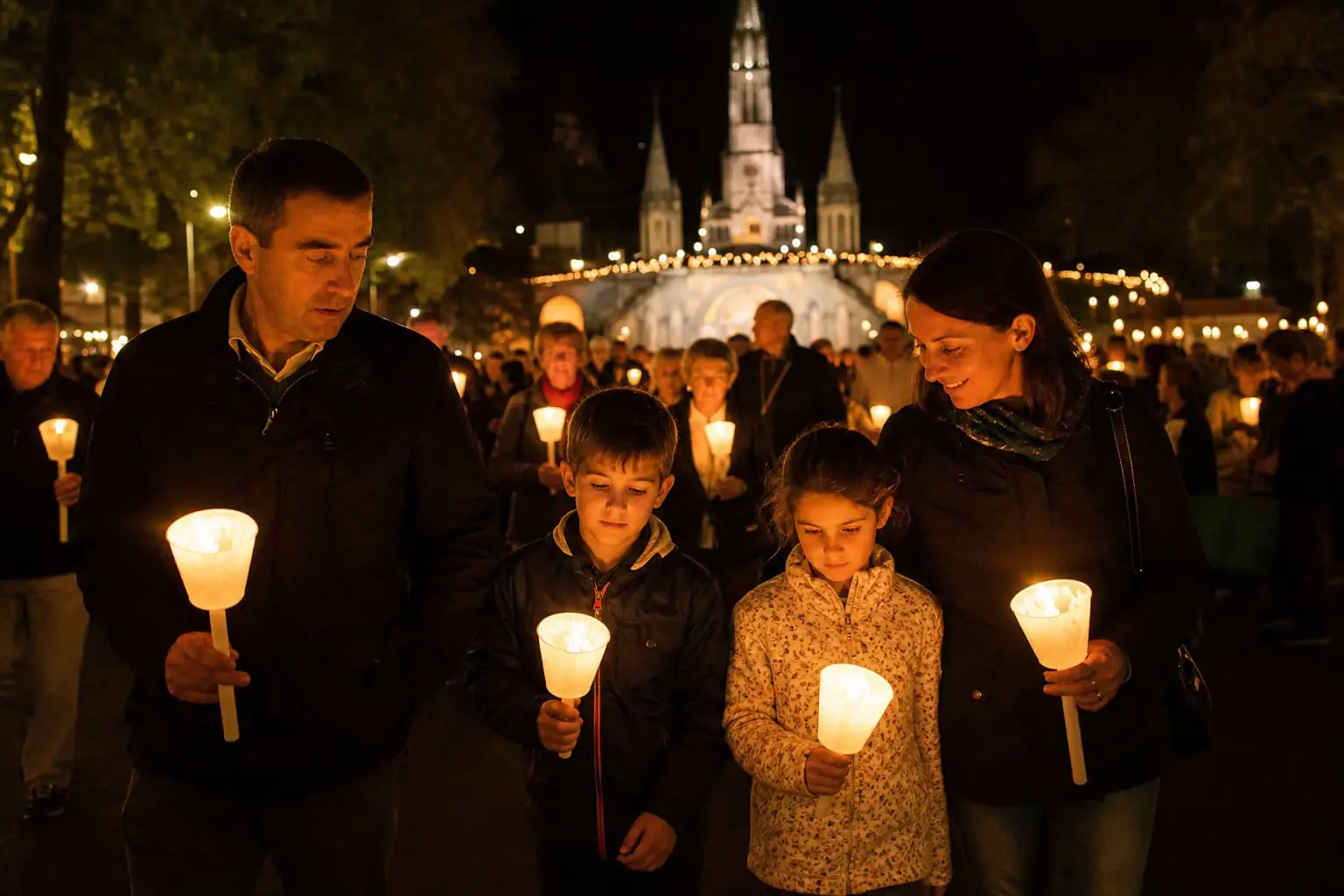
The Esplanade is the broad river-bank avenue that runs from the Grotto to the forecourt of the Rosary Basilica, approximately 400 metres long. This is the stage for both major daily processions: the afternoon Eucharistic Procession and Blessing of the Sick (17:00) and the evening Torchlight Marian Procession (21:00). The Esplanade is also the gathering space for large outdoor Masses during feast days and national pilgrimages, when temporary altars are erected and the space fills with tens of thousands of pilgrims. Even when empty, it is worth walking its full length: the perspective from the Basilica forecourt looking back toward the Grotto and mountains is among the most iconic views in Catholic Europe.
The Way of the Cross and the Rosary Garden
On the hillside above and to the right of the Sanctuary, a large outdoor Way of the Cross ascends through 15 stations, each marked by life-size bronze sculptures of intense expressiveness. The full climb takes approximately 75 minutes and offers expanding views over the Sanctuary and town. A flat accessible route exists at the base of the hill for pilgrims who cannot manage the ascent. The Rosary Garden is a formal garden between the Esplanade and the Gave river, with path-edged flower beds arranged around a central water feature — an ideal place for private rosary or meditative walking between ceremonies. Together, the Way of the Cross and the Rosary Garden offer the active and contemplative dimensions of pilgrimage in physical form.
The Underground Basilica, Adoration Chapel and Chapel of Reconciliation
The underground Basilica of Saint Pius X (accessed via ramps on either side of the Esplanade) is the largest underground church in the world, holding 25,000 people. Its Adoration Chapel at one end maintains perpetual adoration of the Blessed Sacrament — one of the most serene spaces in the entire domain. The Chapel of Reconciliation, adjacent to the Grotto area, provides multilingual confessors throughout pilgrimage season; its simple, functional interior houses individual confession booths and an antechamber for waiting and preparation. A small meditation garden surrounds it. These three spaces together serve the deep interior needs of a pilgrimage: awe, adoration, and the reconciliation that makes space for healing.
Ready to plan your Lourdes pilgrimage?
Our team will build a personalised itinerary and send you a free quote within 1 hour.
Request Free Quote