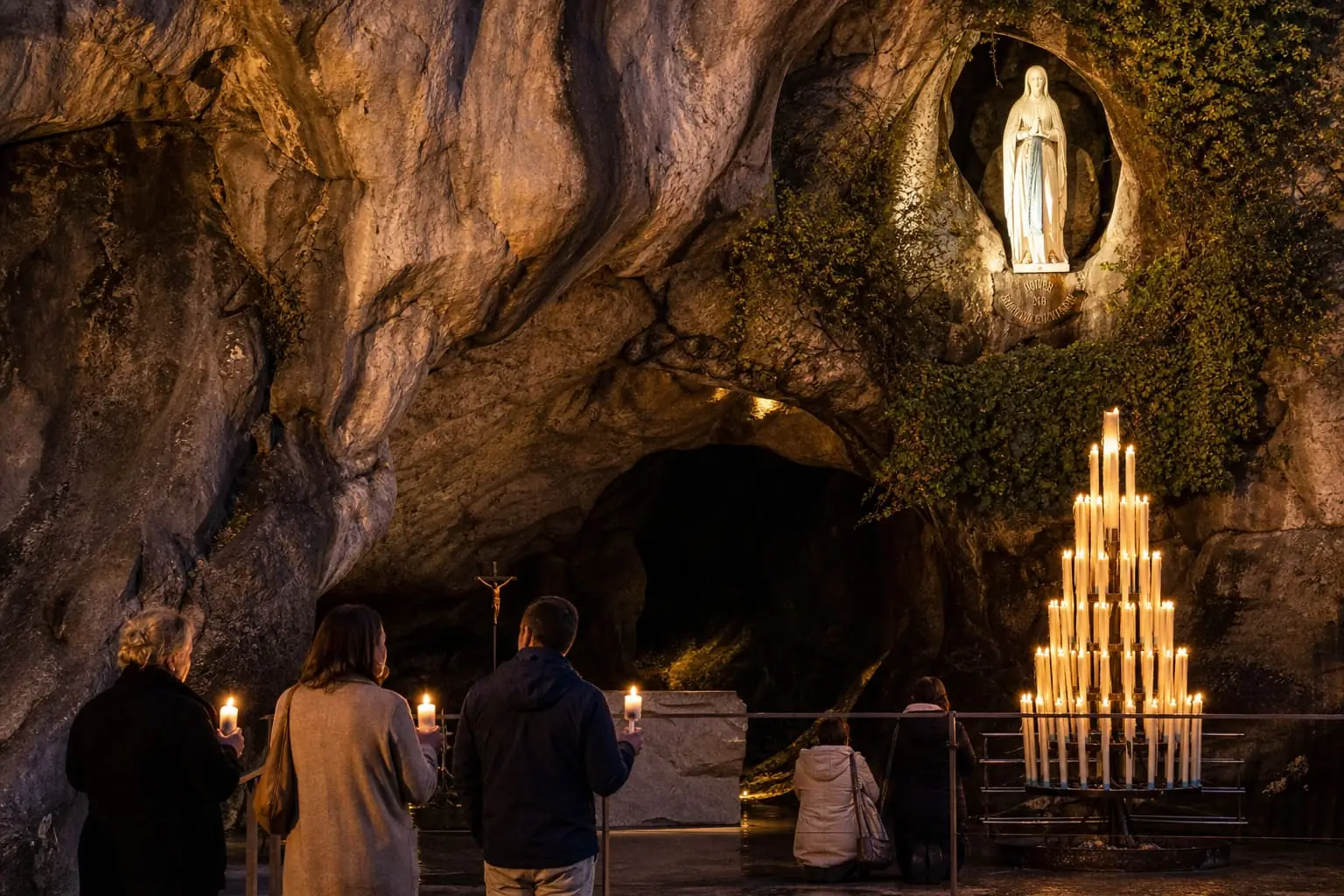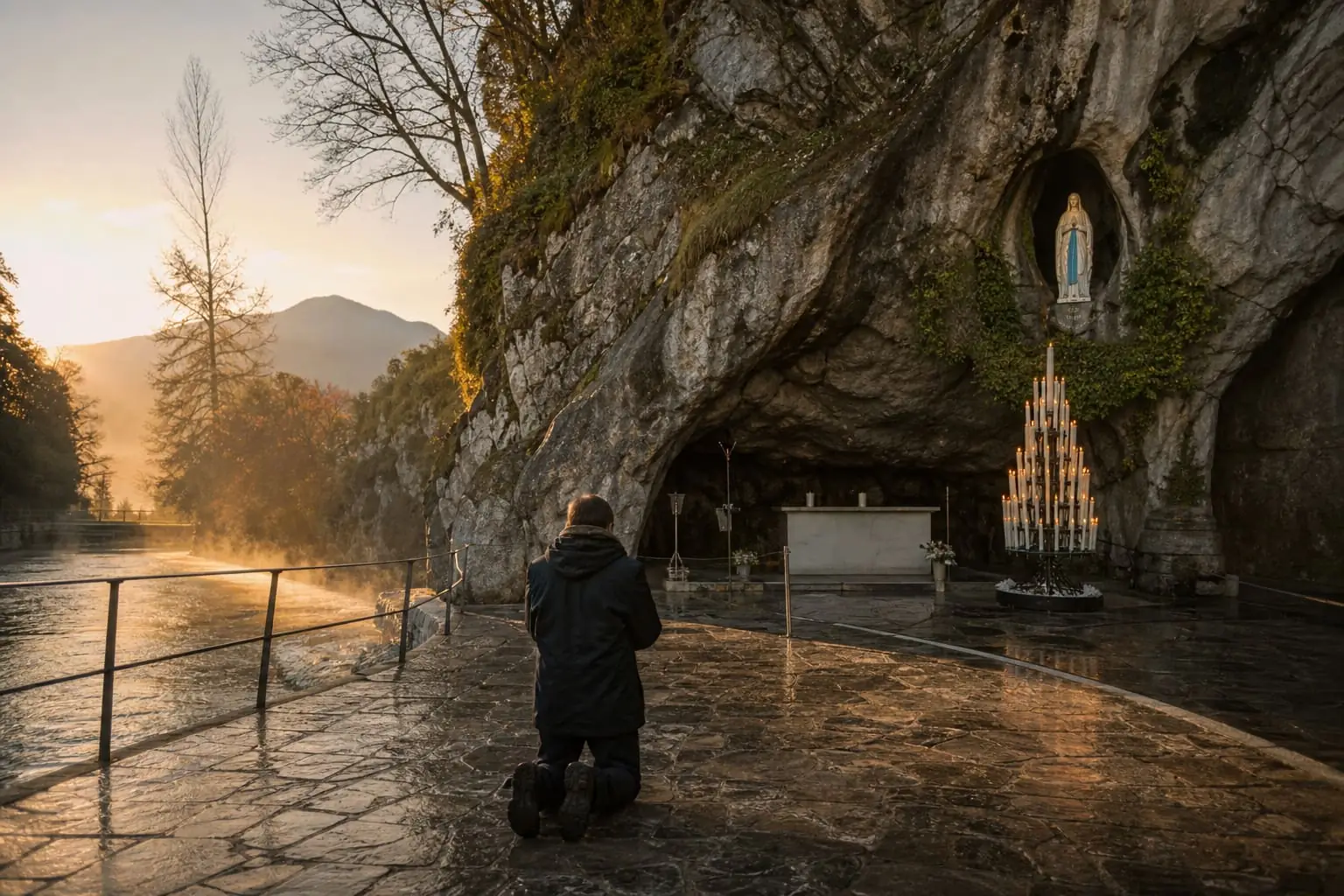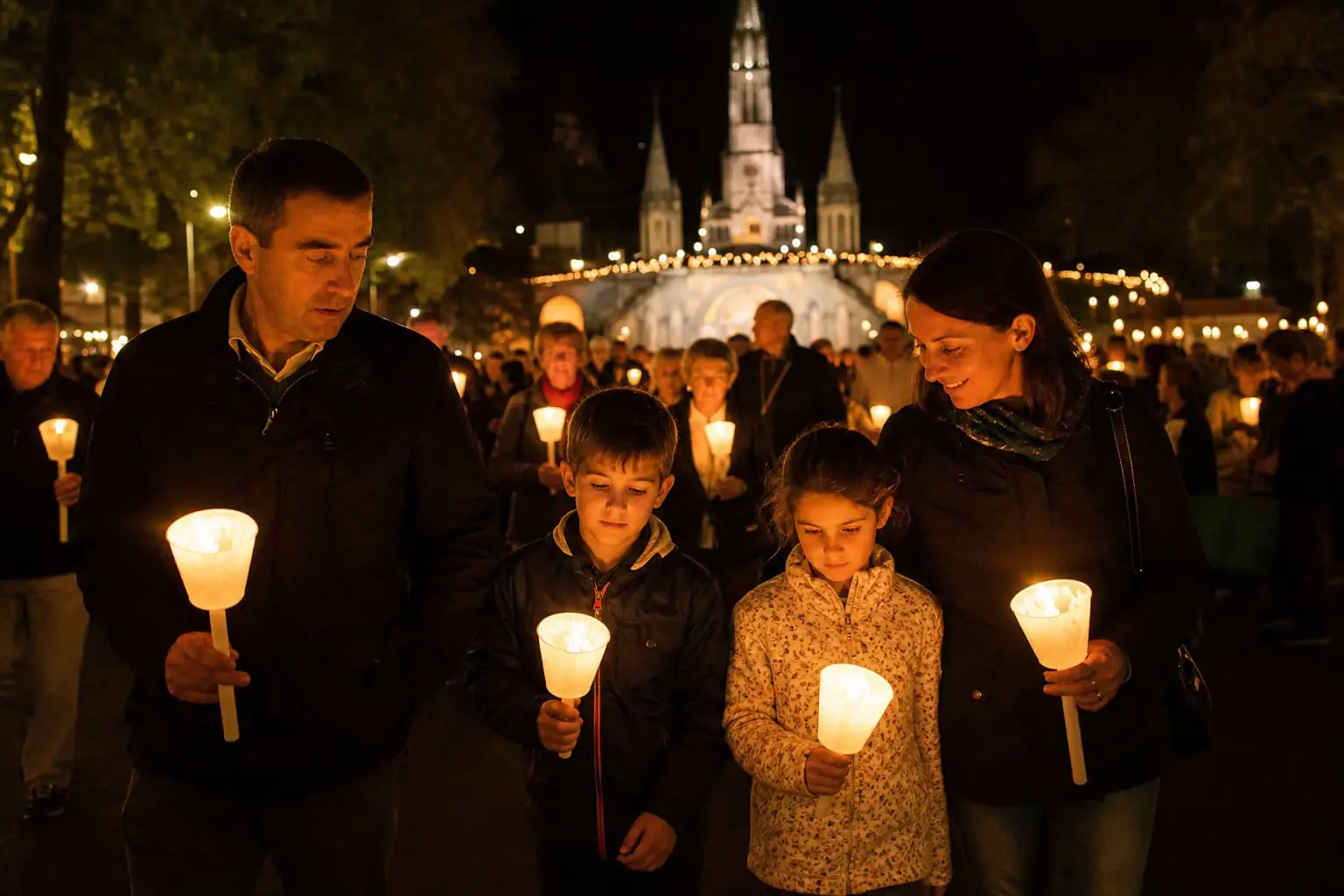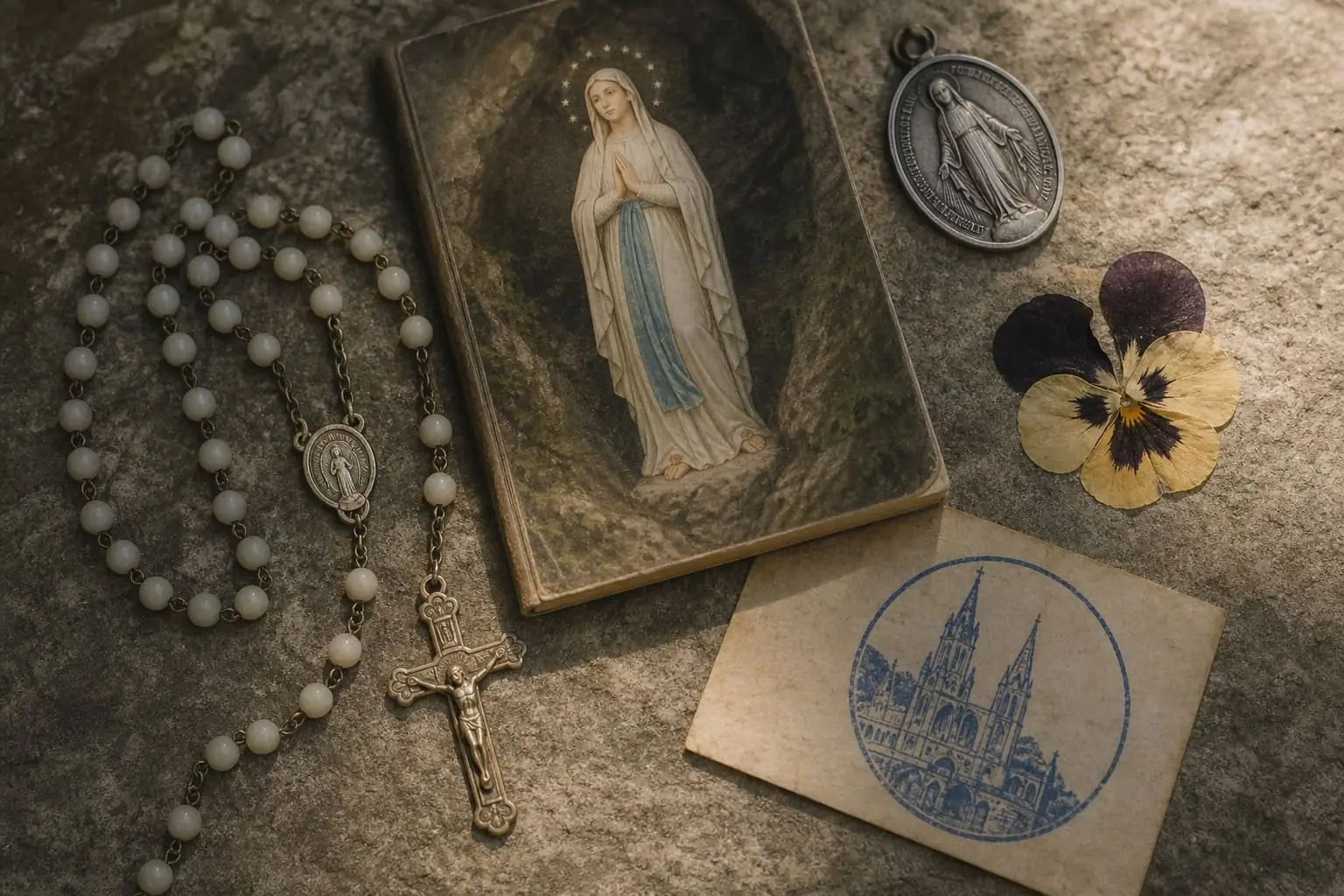
Prayer at Lourdes takes many forms. There is the formal liturgy of the Mass, the quiet personal prayer at the Grotto, the communal rosary of the Torchlight Procession, and the sung prayer that fills the Sanctuary on every evening of the pilgrimage season. What strikes many pilgrims — particularly those returning after years away from regular practice — is how quickly the prayers become theirs. Something about Lourdes makes words that may have felt empty in other contexts suddenly alive. This guide introduces the most important prayers of the Sanctuary and explains how to engage with them whether you are a lifelong devotee or someone returning to prayer for the first time in years.
The Ave Maria of Lourdes
The Ave Maria of Lourdes is not the traditional Latin Ave Maria (though that is prayed here too). It is a distinct hymn composed in 1873 by Father Gaignet and Abbé Pombal specifically for the Lourdes processions. Its chorus — "Ave, Ave, Ave Maria" — is sung first in Latin, then in the languages of the pilgrims present: French, English, Italian, Spanish, German, Polish, Korean, Portuguese. The melody is haunting and immediately memorable; most pilgrims find they can join in the chorus after hearing it once. It is sung at the Torchlight Procession every evening and has become, for many pilgrims, the single most powerful auditory memory of Lourdes — the sound of tens of thousands of voices rising in the dark.
The Hail Mary in Multiple Languages
The Hail Mary is prayed constantly at Lourdes, embedded in every rosary, in the Torchlight Procession, and in many of the Grotto ceremonies. At Lourdes it is often prayed in sequence through multiple languages, a practice that reflects the Sanctuary's international character and embodies the universal Church in sound. Pilgrims who do not know the Hail Mary in other languages frequently find themselves moved by hearing it in Polish or Korean or Arabic — the same prayer, the same petition, articulated in voices so different from their own. Prayer booklets available at the Sanctuary information offices include the Hail Mary in twelve or more languages, and learning one unfamiliar version before you travel is a small act of solidarity with pilgrims from other nations.
The Lourdes Creed
At the Grotto Mass, the congregation recites the Apostles' Creed — the ancient baptismal profession of Christian faith. At Lourdes this familiar prayer takes on particular weight: standing at the site of the apparitions, surrounded by pilgrims from dozens of nations, reciting in unison the beliefs that unite all Catholics across every difference of culture and language, the Creed becomes less a formula and more an act of collective identity. Many pilgrims report that the Creed at the Grotto Mass is one of the moments they carry home most vividly from the pilgrimage.
Bernadette's Personal Prayers and the Prayer to Our Lady of Lourdes
Bernadette had several personal prayers that she prayed regularly. The most well known is a simple prayer to Our Lady she composed herself: direct, childlike, and entirely characteristic of her voice. The formal Prayer to Our Lady of Lourdes used throughout the Sanctuary ("O ever Immaculate Virgin, Mother of Mercy...") is printed in prayer booklets distributed free at the Grotto and at Sanctuary entrances. Many pilgrims find this prayer an ideal structure for the intention they have brought to Lourdes: it names the hope, places it in Our Lady's hands, and asks for whatever God wills in response.
Participating When You Don't Know the Words
No pilgrim should feel excluded from the prayers of Lourdes by an imperfect memory or rusty practice. The Sanctuary provides printed prayer sheets in multiple languages at every major ceremony. The sung prayers — particularly the Ave Maria — are designed to be learned by ear, by repetition, during the procession itself. If you find yourself at a ceremony not knowing the words, simply listen: that too is prayer. Many experienced spiritual directors advise that the most honest prayer is sometimes simply presence — sitting or standing with others in a posture of openness, letting the sound of communal prayer wash over you without requiring yourself to produce anything. Lourdes welcomes all of it.
Taking These Prayers Home
One of the most undervalued dimensions of the Lourdes prayer tradition is its portability. The Ave Maria of Lourdes, the Hail Mary in multiple languages, the Prayer to Our Lady of Lourdes — all of these can be continued at home after the pilgrimage ends. Many pilgrims who have experienced the sung rosary at the Torchlight Procession begin praying the rosary regularly at home for the first time in years. A small card with the Lourdes Ave Maria, brought home and placed near a prayer corner, becomes a daily reminder of the encounter at the Grotto. The prayers of the Sanctuary are not reserved for Lourdes; they travel with you.
Ready to plan your Lourdes pilgrimage?
Our team will build a personalised itinerary and send you a free quote within 1 hour.
Request Free Quote