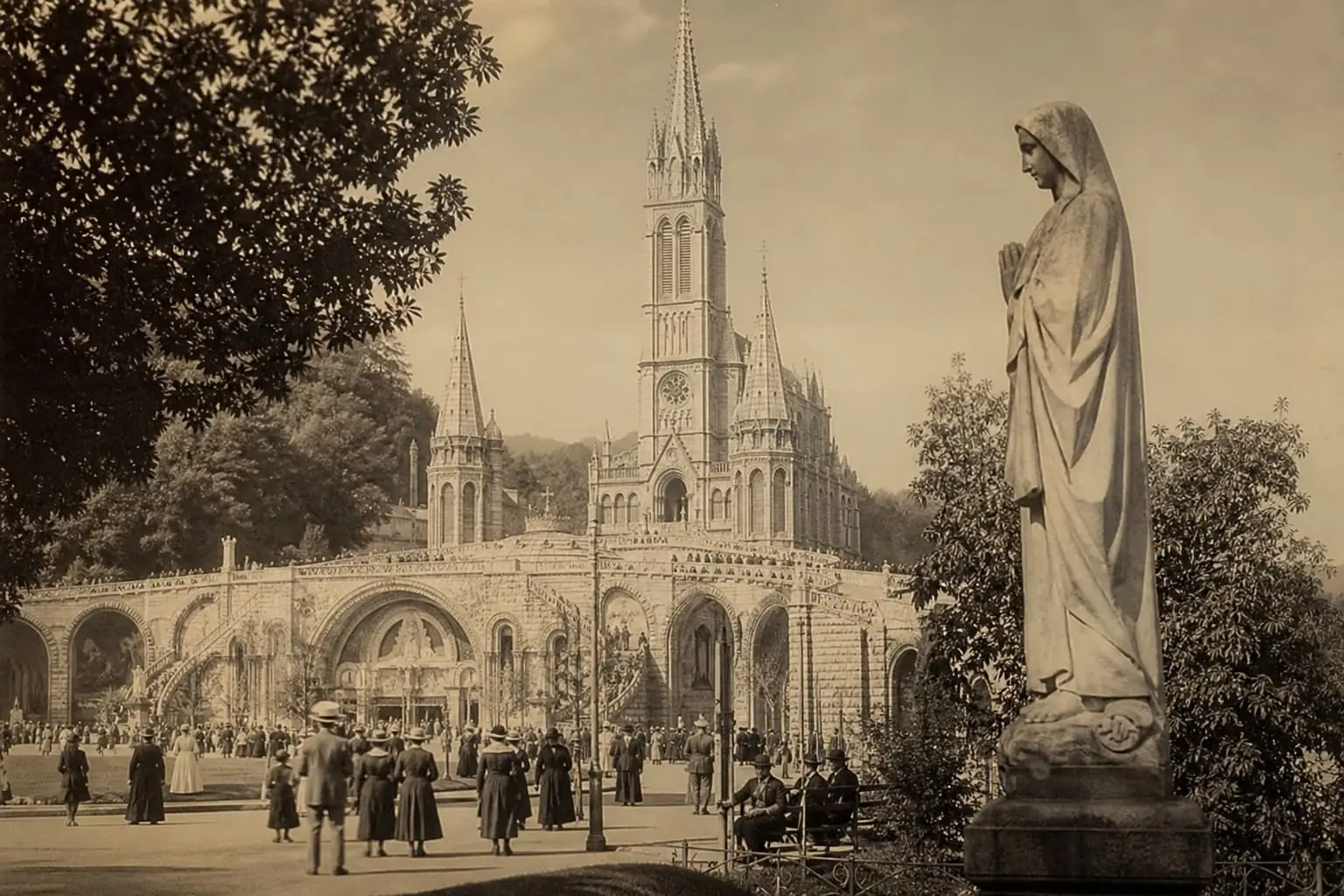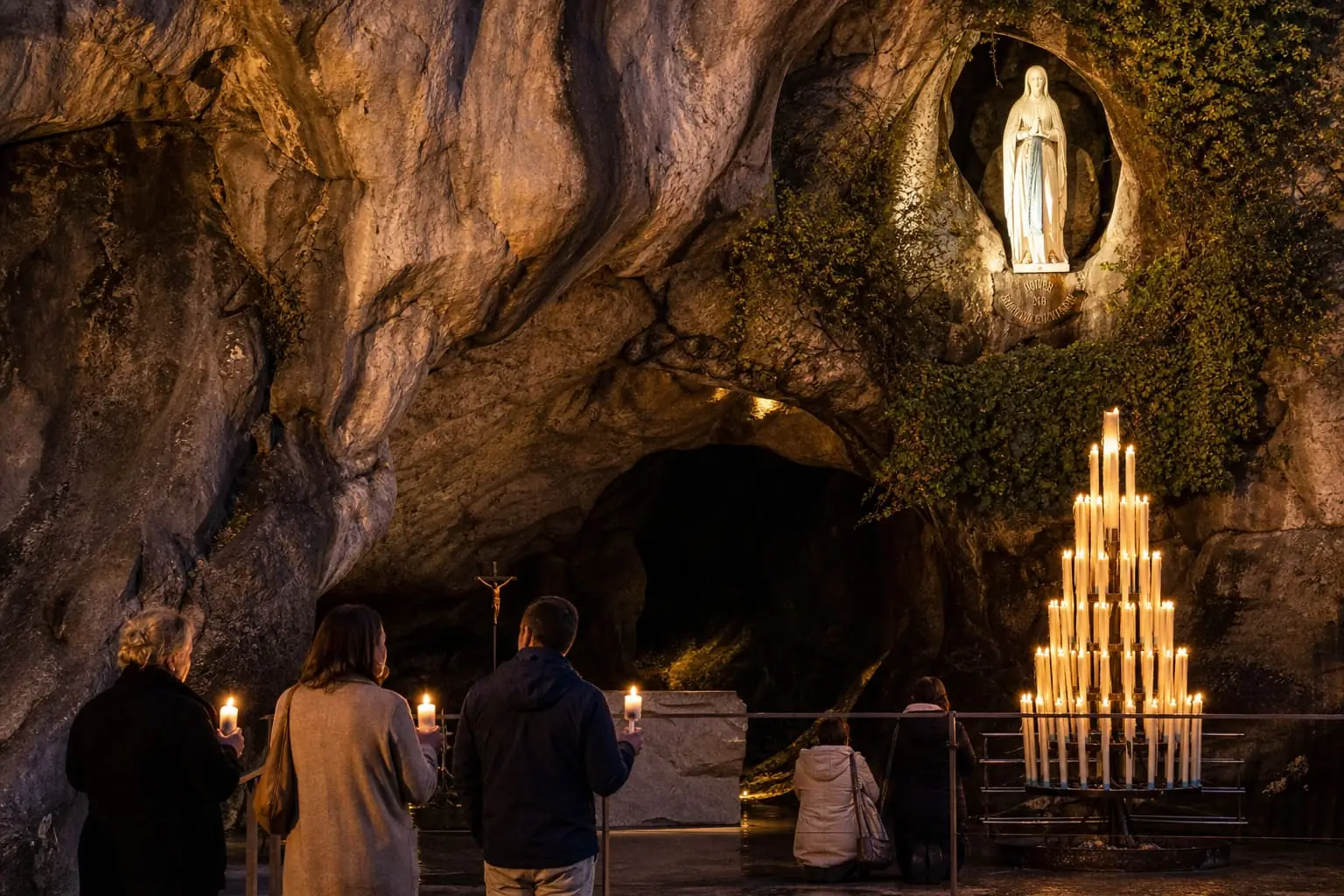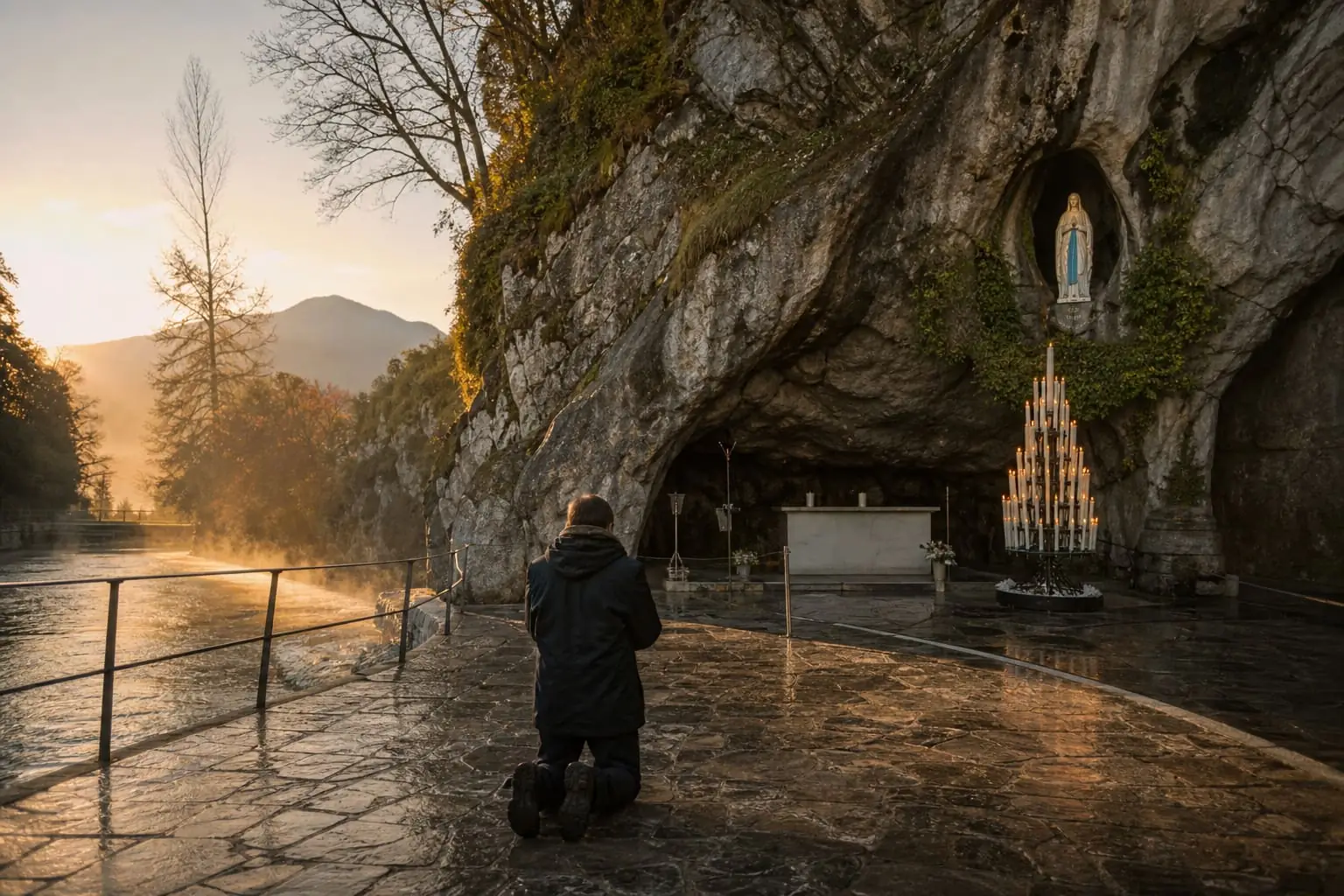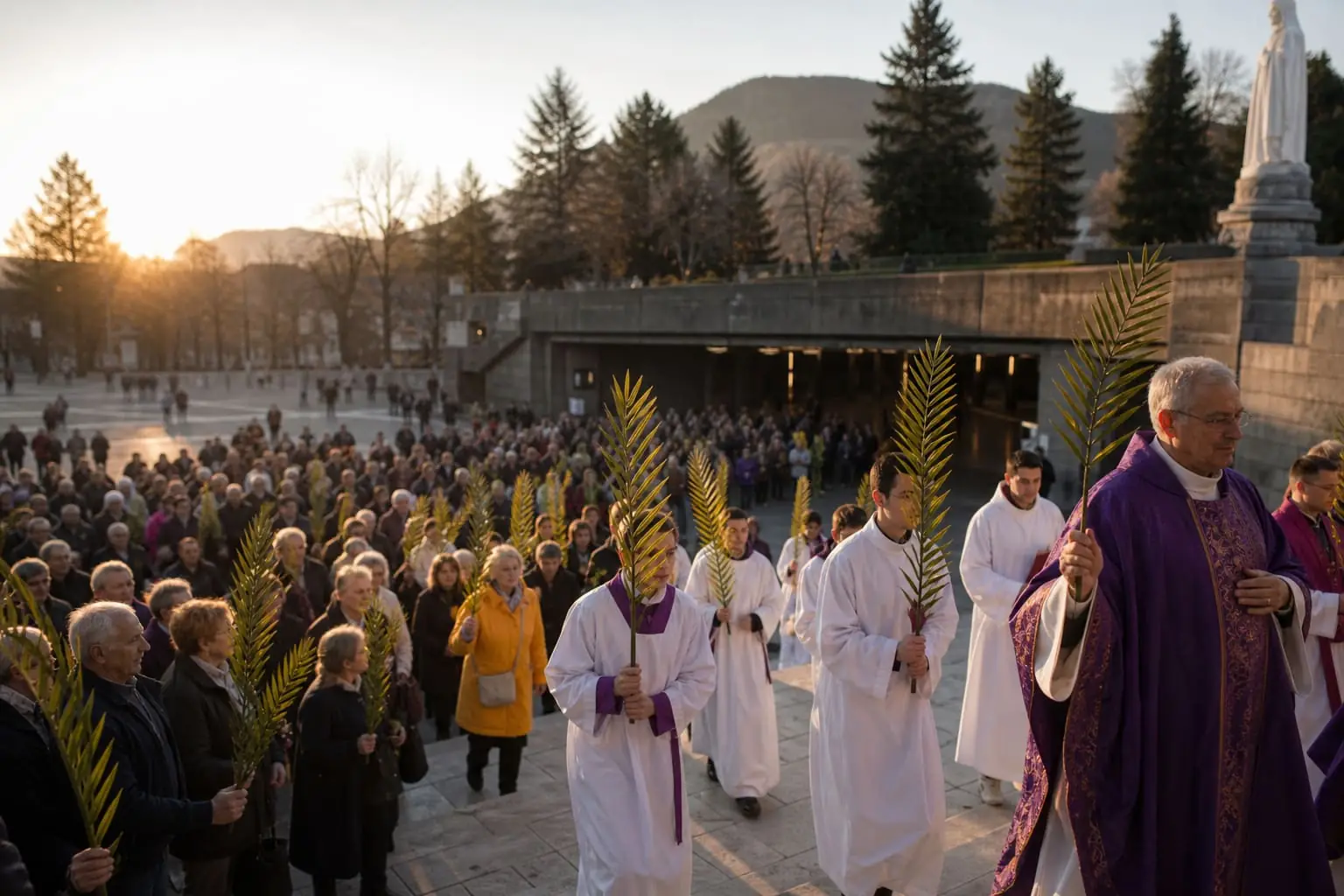
There is something uniquely apt about spending Holy Week at Lourdes. Elsewhere in the Catholic world, the Passion liturgies of Holy Thursday, Good Friday and the Easter Vigil are celebrated in parish churches, with congregations who have known each other for years. At Lourdes, the same liturgies take place in the world's largest underground basilica, or in the open air above the Grotto where the spring of healing flows, surrounded by pilgrims from dozens of countries — many of them sick, many carrying grief, all of them standing at the convergence of suffering and resurrection. The connection between a shrine of healing and the mystery of death and new life is not coincidental. It is the theological heart of both.
Why Easter at Lourdes Is Unique
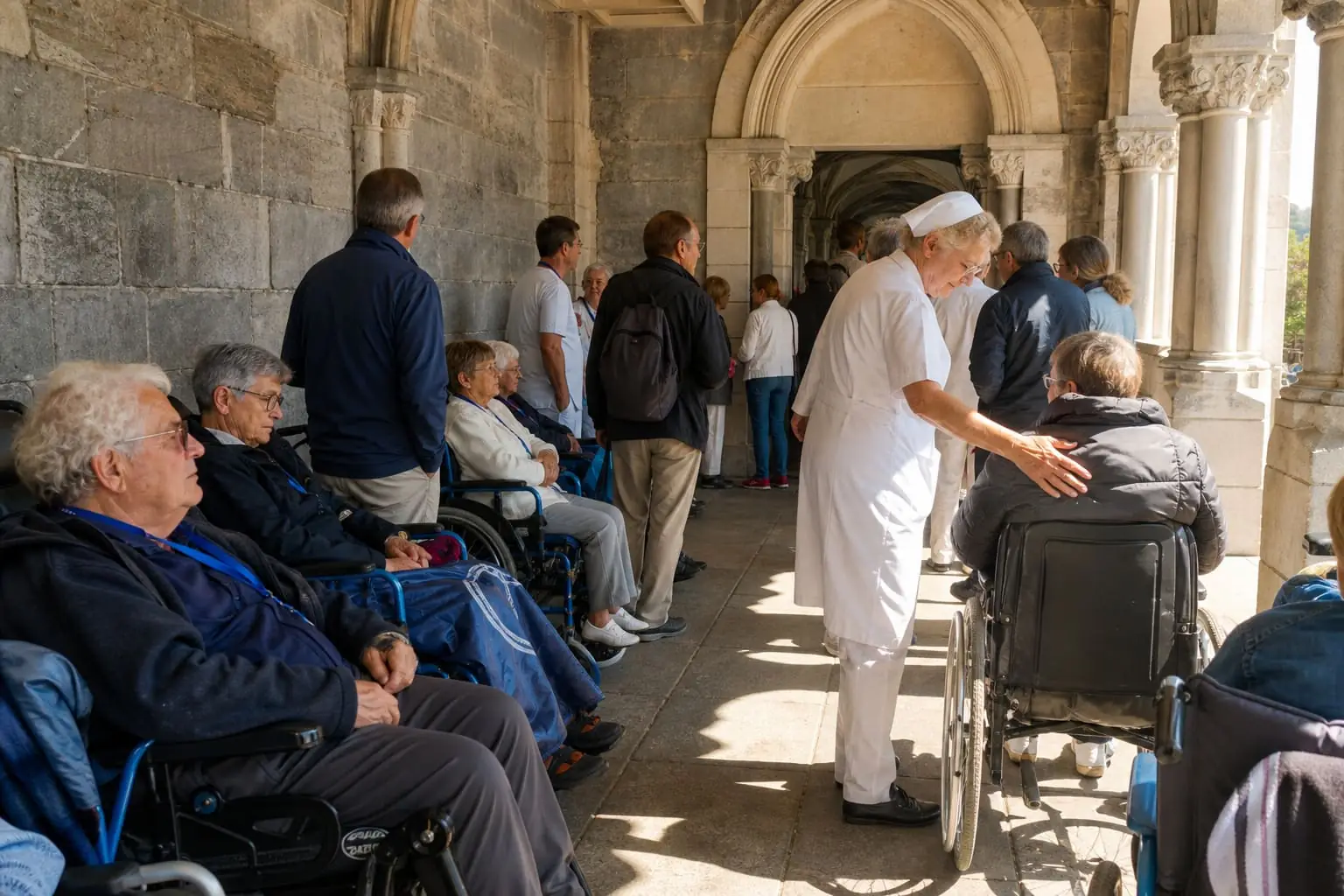
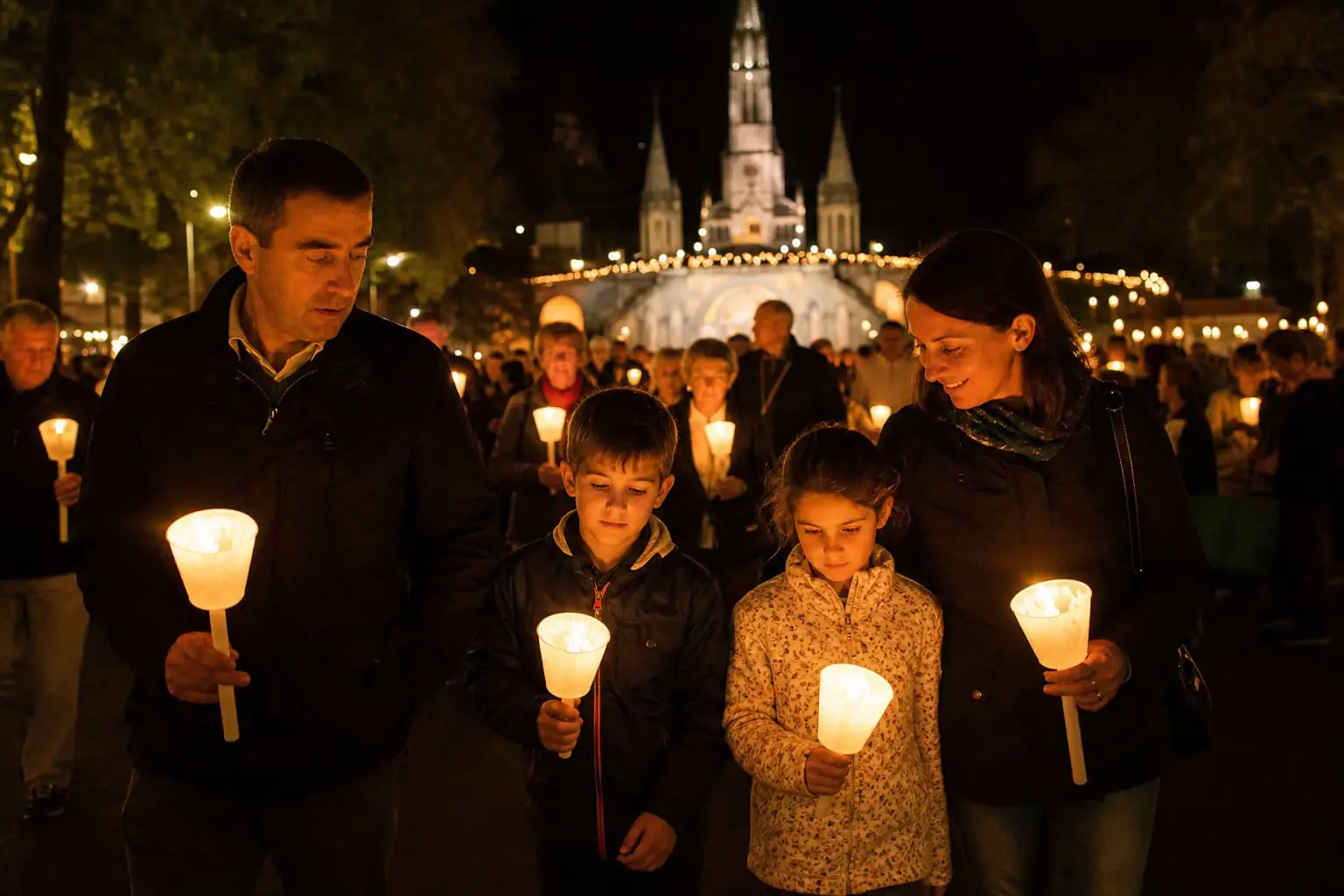
The connection between suffering and resurrection that the Church celebrates in Holy Week finds its most visceral setting at Lourdes. The sick pilgrims in voiturettes, the Grotto where healings began, the Medical Bureau documenting the inexplicable — all of these dimensions of Lourdes theology connect directly to the Paschal mystery. Jesus crucified and risen is the one who heals; Mary at the foot of the Cross is the same Mary who appeared at Massabielle. Holy Week at Lourdes makes these connections not as abstract theology but as lived experience: pilgrims in wheelchairs attending the Way of the Cross on Holy Thursday night, their faces lit by torches, following Christ to Calvary in a way that is not metaphorical but bodily and direct.
Specific Holy Week Ceremonies at the Sanctuary
The Sanctuary offers a full programme of Holy Week liturgies distinct from ordinary parish celebrations. Holy Thursday includes a solemn Mass of the Lord's Supper followed by the Way of the Cross processed through the Sanctuary by torchlight — one of the most moving ceremonies of the pilgrimage year. Good Friday brings the solemn Liturgy of the Passion and a communal Way of the Cross on the hillside above the Sanctuary, attended by thousands from every nation present. The Easter Vigil is celebrated in the underground Basilica of Saint Pius X — 25,000 people in candlelit darkness, the Exsultet echoing from Nervi's great concrete arches, the moment of resurrection proclaimed in a space built for exactly this kind of overwhelming liturgical encounter.
The Atmosphere: Devout, Joyful and International
Easter at Lourdes is not mournful, even through the solemnity of Good Friday. The Sanctuary's atmosphere in Holy Week combines deep liturgical seriousness with the joy of an international gathering and the particular hope of a healing shrine. The HCPT (Handicapped Children's Pilgrimage Trust) brings children with disabilities from the UK and Ireland each Easter, creating a presence of children's laughter and exuberant prayer that lifts the entire Sanctuary. Many experienced pilgrims describe Easter at Lourdes as qualitatively different from any other liturgical experience: the Resurrection announced in a place of healing, in the company of the suffering, sung in twenty languages simultaneously.
Practical Advice for Holy Week Pilgrims
Easter Week requires booking significantly earlier than most other dates. Demand from HCPT, diocesan pilgrimages and independent pilgrims means that accommodation close to the Sanctuary fills by November or December for the following Easter. Weather in April at Lourdes is changeable: the Pyrenees still have snow on their upper slopes, and temperatures range from cool (5°C at night) to pleasantly mild (15°C in the afternoon). Bring layers, a waterproof jacket and comfortable footwear suitable for both outdoor processions on stone paths and the cool interior of the underground Basilica. The outdoor ceremonies, particularly the hillside Way of the Cross on Good Friday, can be long — comfortable shoes and warm clothing are not optional.
What Pilgrims Who Come at Easter Consistently Say
Pilgrims who have experienced Easter at Lourdes — particularly the Easter Vigil in the underground Basilica and the Way of the Cross by torchlight on Holy Thursday — consistently describe it in terms that go beyond any other liturgical experience they have had. "I have attended Easter Vigil in my parish for forty years," one pilgrim told us. "Nothing prepared me for this." The combination of the physical space, the international community, the presence of the sick and vulnerable in the congregation, and the depth of the Lourdes setting transforms already-powerful liturgies into something categorically different. For pilgrims of deep faith, it is a summit. For pilgrims returning to faith, it is often the turning point.
Ready to plan your Lourdes pilgrimage?
Our team will build a personalised itinerary and send you a free quote within 1 hour.
Request Free Quote