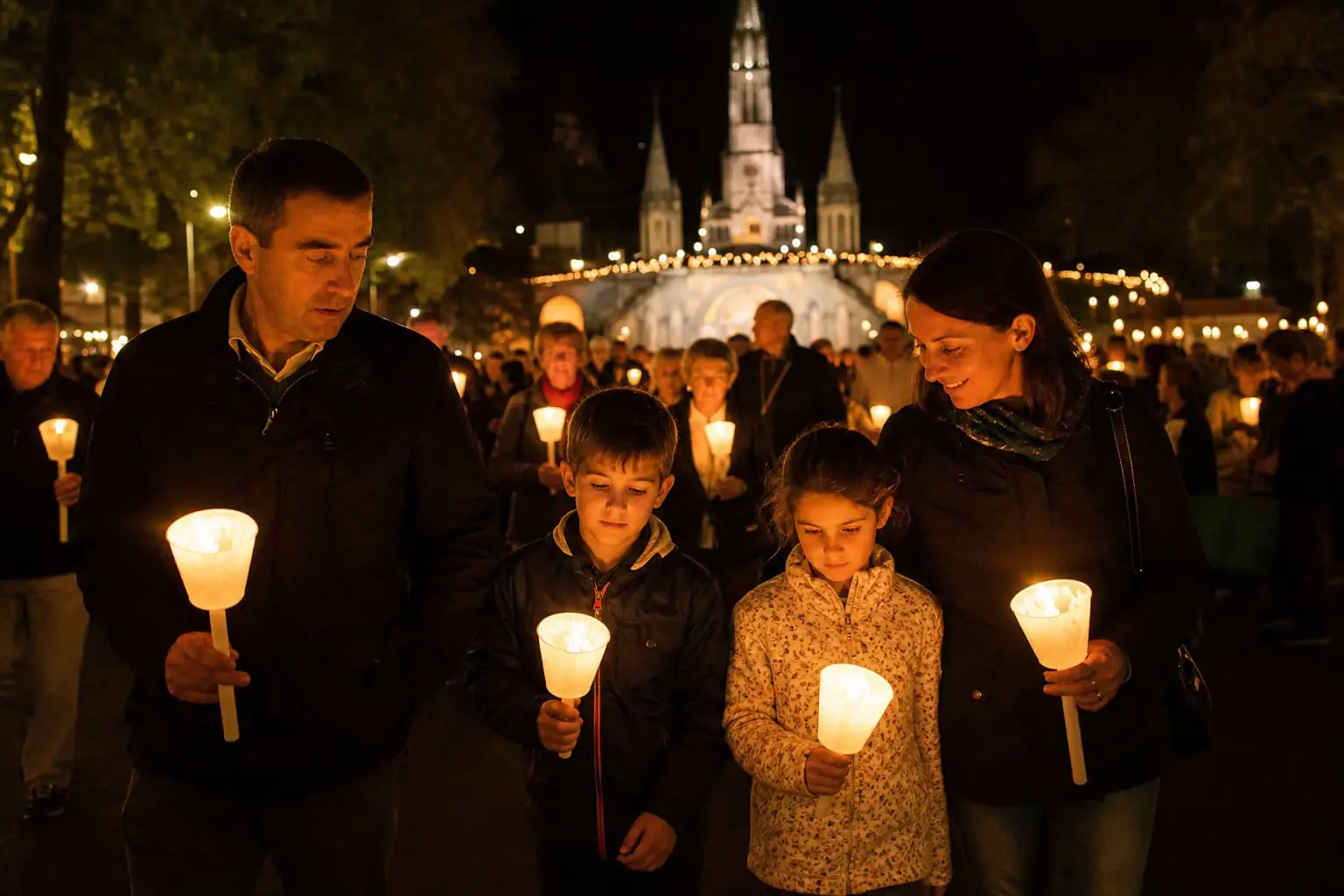
Lourdes welcomes pilgrims throughout the year, but the pilgrimage calendar is not uniform. Each season has its own character, its own crowd patterns, and its own liturgical significance. Understanding the annual calendar — which feast days draw the largest gatherings, when national pilgrimages peak, and which months offer the most reflective atmosphere — is the foundation of good pilgrimage planning. Whether you are organising a parish group, a family trip, or a specialist pilgrimage for the sick, choosing the right time to visit makes an enormous difference to the experience.
The Fixed Great Feast Days
Several feast days structure the annual Lourdes calendar above all others. The Feast of Our Lady of Lourdes (11 February) is the anniversary of the first apparition and includes special Masses, the World Day of the Sick ceremonies, and an atmosphere of deep winter devotion. Easter Week draws pilgrims for the Passion liturgies and Easter Vigil in the underground Basilica — the connection between Christ's suffering, resurrection, and the healing shrine creates a particularly powerful Holy Week experience. Pentecost marks the close of the Easter season with international gatherings. The Feast of the Assumption (15 August) is the summit of the year, with 100,000 or more pilgrims, the Pontifical Mass, and the great International Blessing of the Sick. The Feast of Our Lady of the Rosary (7 October) closes the main pilgrimage season with a significant Marian celebration.
National Pilgrimages: When Nations Arrive
The great national pilgrimages from across Europe and beyond define the pilgrimage season's rhythm. The French national pilgrimage (Pèlerinage National) arrives in late April, one of the earliest and largest of the season. Italian diocesan pilgrimages peak in early September. The Irish diocesan and national pilgrimages run through June, July and early August. Polish national pilgrimage groups are among the largest in Lourdes and peak in late July and August. The British National Pilgrimage (organised by the Catholic Association) traditionally takes place in late July. Understanding when your country's pilgrimage arrives helps groups either join their national community at Lourdes or choose a quieter alternative period.
The Quieter Seasons: March–April and October–November
For pilgrims and groups seeking a more reflective experience, the shoulder seasons offer real advantages. March and April are genuinely quiet in the Sanctuary: the full liturgical programme is not yet operational, but the Grotto is always open, the spring taps flow, and the town is unhurried. A small-group pilgrimage in early April — before Easter draws larger crowds — offers an intimacy with the Grotto that high summer makes difficult. October and November have a similar quality: the season is winding down, the Pyrenees are beginning to show their autumn colours, and the pilgrims who come are often those returning for a second or third time, seeking depth rather than spectacle.
Booking Advice for Key Dates
The Feast of the Assumption (15 August) is the single date for which advance booking is most critical. Accommodation fills twelve months or more in advance for this date; groups that try to book in the spring for a 15 August visit will find nothing available. Easter Week similarly requires booking at least six to nine months ahead. For the national pilgrimages (June–September), booking four to six months ahead is standard. For quieter periods (March–April, October–November), three months is usually sufficient for smaller groups. Our team can advise on current availability for your preferred dates and can often access hotel blocks that are not publicly visible on booking platforms.
What Each Season Offers the Pilgrim Differently
Winter and early spring (February–March) offer silence, intimacy with the Grotto, and the particular spiritual quality of visiting a pilgrimage shrine in the cold and dark — close to Bernadette's own experience. Late spring and early summer (May–June) offer the ideal balance: full ceremony programme, manageable crowds, beautiful mountain weather. High summer (July–August) offers the international community experience at its most vivid: national processions, tens of thousands of candles in the Torchlight Procession, the electric atmosphere of the great feast days. Autumn (September–October) offers a gentle fade: the season winding down, the mountains beginning to change colour, the Sanctuary returning to a slower pace. Every season holds Lourdes; what varies is the particular note it sounds.
2026-Specific Events and Planning
In 2026, the Feast of Our Lady of Lourdes falls on a Wednesday (11 February), making it accessible for a midweek pilgrimage from any European country. Easter Sunday is on 5 April, placing Holy Week in late March and early April — excellent weather for outdoor Sanctuary ceremonies. The Assumption on 15 August 2026 falls on a Saturday, which is expected to generate very large attendance and requires the earliest possible booking. Groups planning a 2026 pilgrimage are advised to confirm dates and accommodation by late 2025 for any summer travel and as early as possible for the Assumption. Contact us for a 2026 pilgrimage quote tailored to your group's preferred dates and requirements.
Ready to plan your Lourdes pilgrimage?
Our team will build a personalised itinerary and send you a free quote within 1 hour.
Request Free Quote