On 25 March 1858, the Feast of the Annunciation, Bernadette Soubirous asked the Lady in the Grotto her name for the fourth time. The figure joined her hands in prayer, lifted her eyes to heaven, and replied in Bernadette's local dialect: "Que soy era Immaculada Councepciou" — "I am the Immaculate Conception." Bernadette ran immediately to Father Peyramale, the sceptical parish priest, repeating the phrase as she went so she would not forget words she did not understand. For the commission of inquiry that would eventually approve the apparitions, and for the Church as a whole, these words would become among the most significant arguments for the authenticity of what had taken place at the Grotto.
The Dogma of 1854: Four Years Before Lourdes
The Immaculate Conception had been defined as a dogma of the Catholic Church by Pope Pius IX on 8 December 1854, just four years before Bernadette's vision. The dogma states that Mary was preserved from original sin from the moment of her conception — that she alone of all human beings was not subject to the fallen condition that affects the rest of humanity. This was the culmination of centuries of theological debate within the Church, and its proclamation as a binding dogma was itself a momentous theological event. Four years later, a semi-literate fourteen-year-old girl in a remote corner of the Pyrenees spontaneously identified the figure she saw using the precise formula of this dogma. This was not coincidence; for Bishop Laurence and the commission, it was decisive.
What the Immaculate Conception Actually Means
The Immaculate Conception is one of the most commonly misunderstood doctrines in Catholicism, even among Catholics. It does not refer to the Virgin Birth — the conception of Jesus by the Holy Spirit without a human father. It refers to the conception of Mary herself — that she was conceived by her parents in the ordinary human way but that God, in view of her future role as the mother of Christ, preserved her from the stain of original sin at the moment of her conception. It is a doctrine about Mary's beginning, not about Jesus's. Bernadette herself, when she delivered the phrase to Father Peyramale, had no idea what it meant — she was simply repeating words she had been given to carry.
Why Bernadette's Not Understanding Matters
The fact that Bernadette did not understand the words "Immaculate Conception" is theologically significant, not merely anecdotally interesting. If she had invented or embellished the apparitions, she would almost certainly have used vocabulary she knew. A girl of her education, in her social context, would have said "the Virgin Mary" or "Our Lady" — not "the Immaculate Conception," a formal theological term that was being actively debated among scholars. Her delivery of words she could not explain, to a priest who immediately recognised their theological weight, was one of the most effective rebuttals of the fraud hypothesis available to the commission of inquiry.
Common Misunderstandings and Their Corrections
Beyond the Virgin Birth confusion, two other misunderstandings recur around the Immaculate Conception. The first is that it implies Mary was sinless throughout her entire life (which is also Catholic teaching but is a different doctrine — her sinlessness through life is called her "sinless life" not the Immaculate Conception). The second is that it makes Mary somehow less human — when in fact the doctrine claims the opposite: it describes what humanity would be without the fall, showing in Mary what God originally intended for all of us. At Lourdes, where Mary appears as the Immaculate Conception, she appears not as something alien but as the image of perfected humanity interceding for imperfect humanity at the Grotto.
The Theological Connection to Penance
There is a striking paradox at Lourdes. The one who appears at the Grotto identifies herself as the Immaculate Conception — the one person in human history preserved from sin. And the central message she delivers is a call to penance, to acknowledgement of sin, to conversion. This paradox is not an accident. The sinless one calling sinners to penance is not a contradiction but a theological statement: only from a position of freedom from sin can one fully understand its weight and cost, and therefore fully desire others' freedom from it. Mary's Immaculate Conception makes her the ideal intercessor precisely for sinners — not despite her sinlessness but because of it.
Why This Matters for Modern Pilgrims
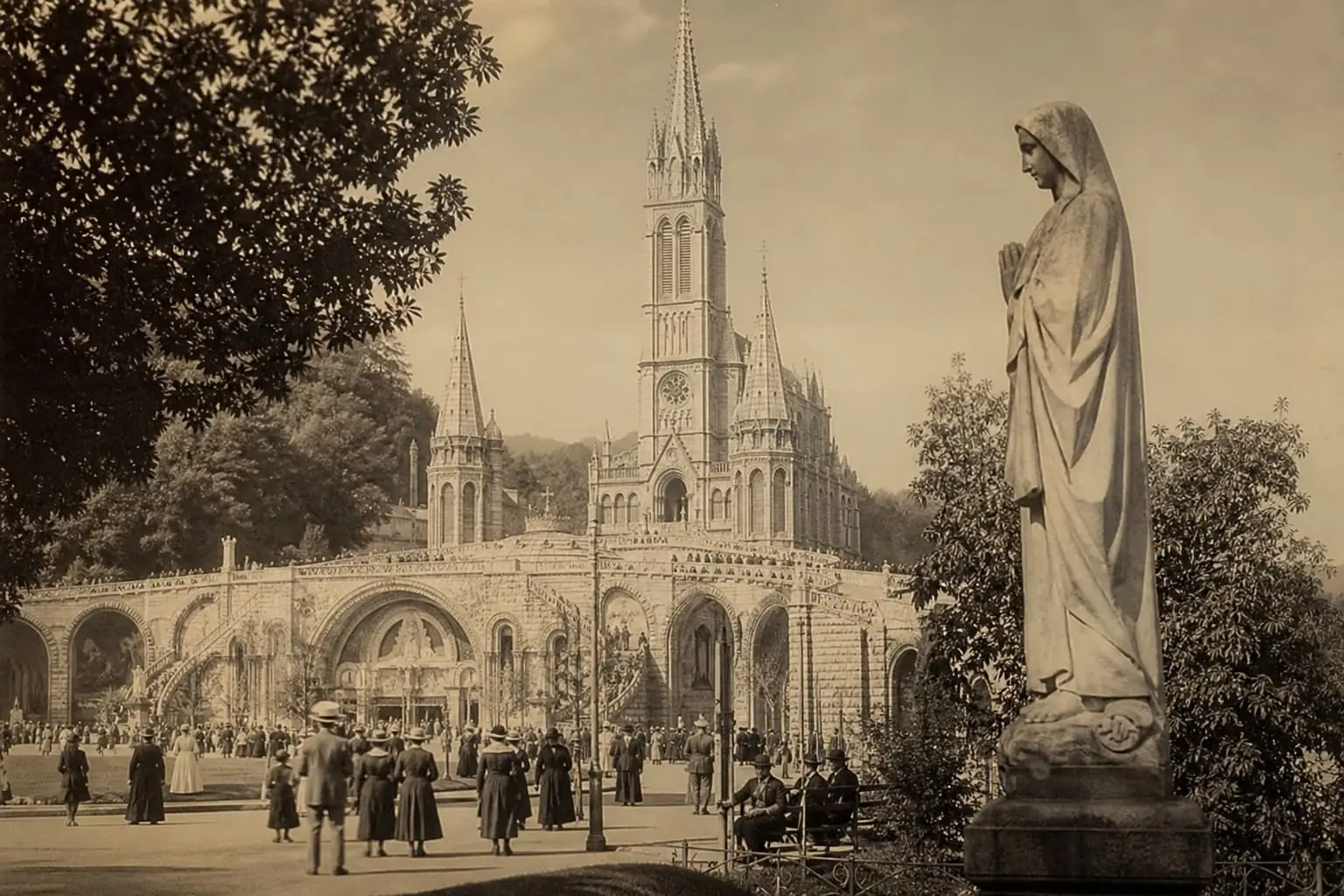
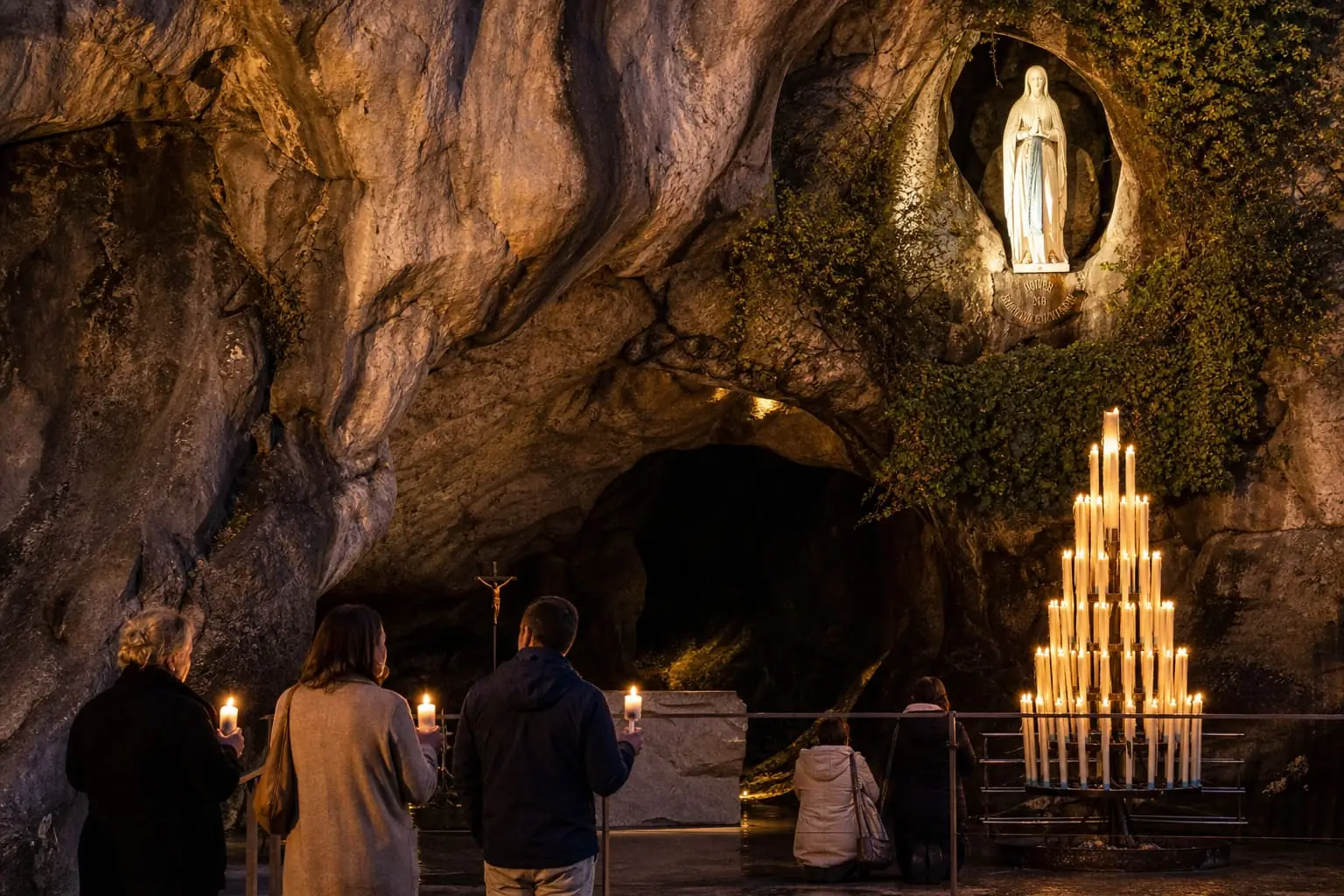
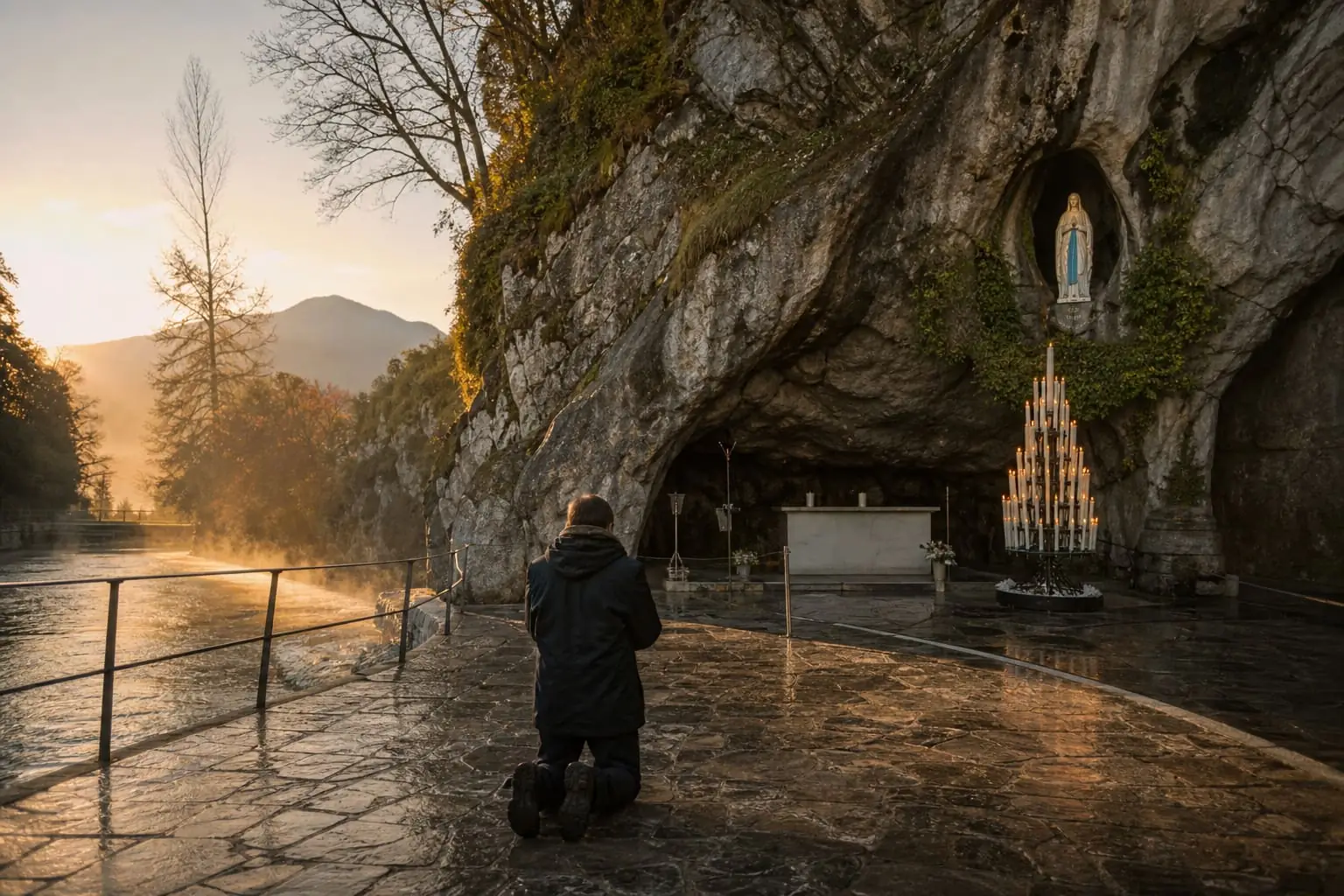
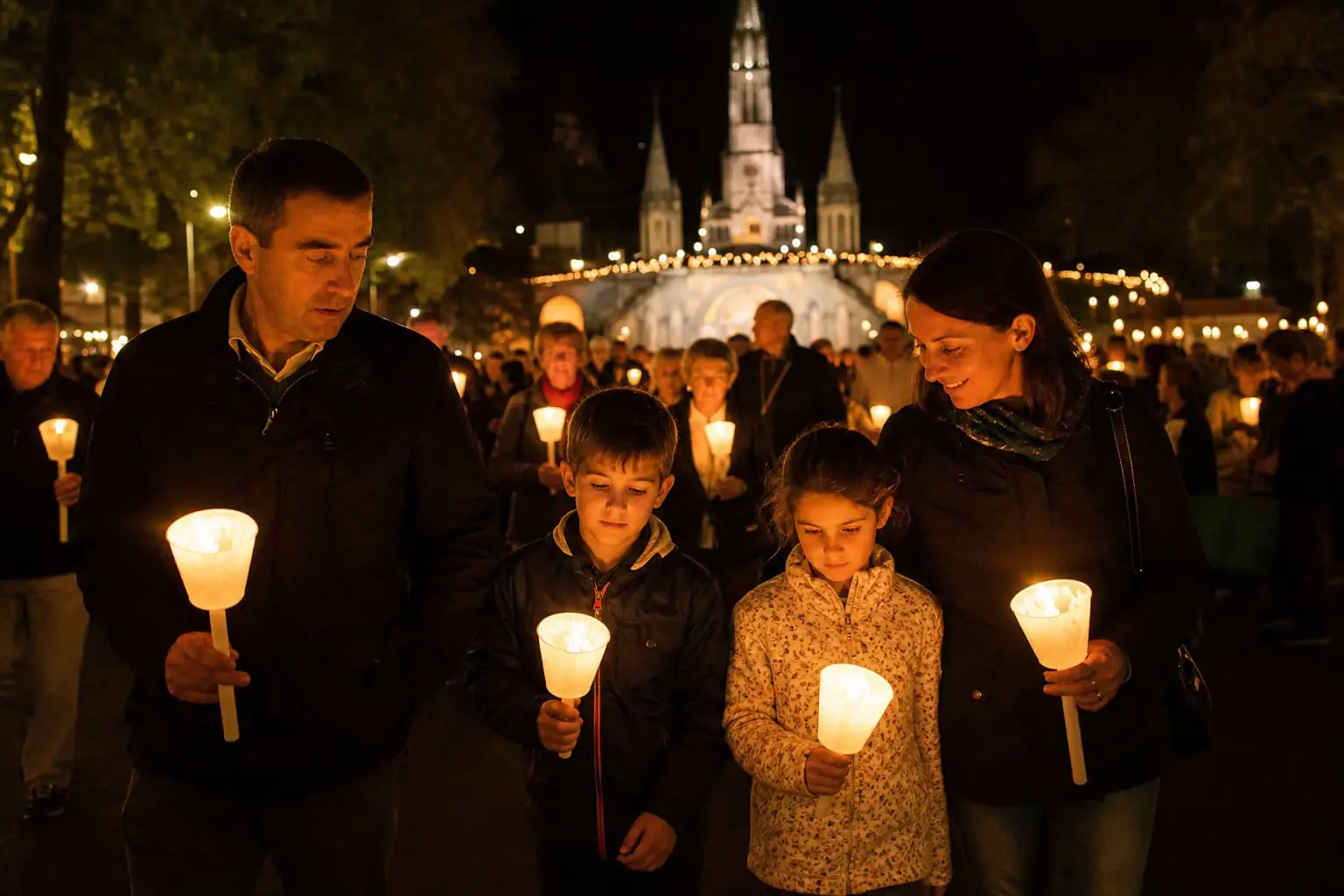
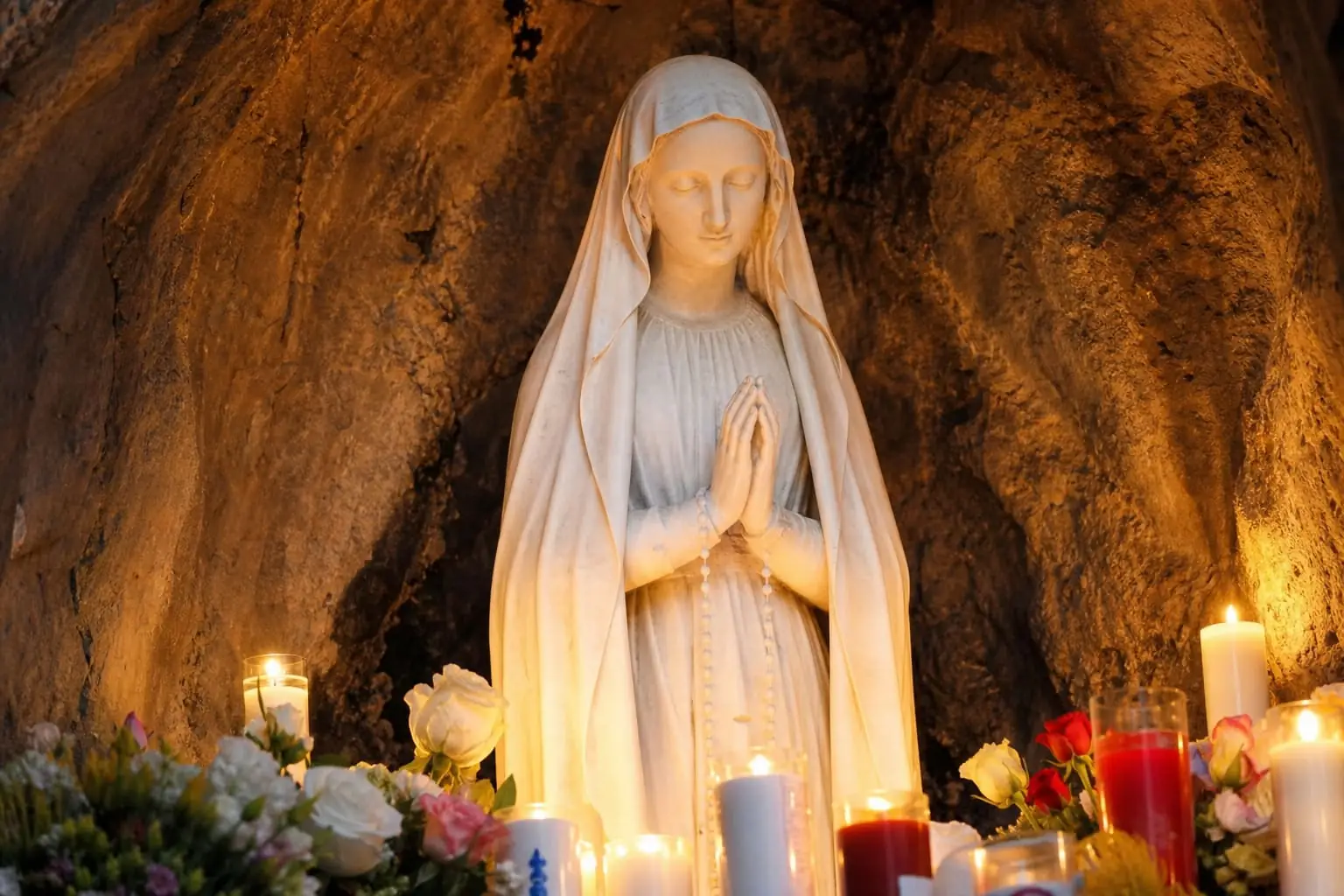
For pilgrims visiting Lourdes today, the Immaculate Conception is not an abstract theological point but a living dimension of the shrine's identity. The Sanctuary's full name is Notre-Dame de Lourdes — Our Lady of Lourdes — and the title under which she appeared is the Immaculate Conception. The upper basilica is the Basilica of the Immaculate Conception. The image of Our Lady in the Grotto niche depicts her as she appeared to Bernadette: white dress, blue sash, hands in prayer. Understanding what she was claiming in those words transforms the Grotto from a beautiful historical site into a place where a specific theological identity has been revealed — and where pilgrims come to encounter not just a memory but a presence.
Ready to plan your Lourdes pilgrimage?
Our team will build a personalised itinerary and send you a free quote within 1 hour.
Request Free Quote