Among the many possible excursions from Lourdes, one stands apart for its natural grandeur, its spiritual resonance, and its sheer geographical drama. The Cirque de Gavarnie, 50 kilometres south of Lourdes along the valley of the Gave de Pau, is a UNESCO World Heritage site, one of the most celebrated natural landscapes in Europe, and a place that has moved writers, artists and pilgrims for centuries. Victor Hugo, who visited in 1843, wrote: "There are wonders, and there is Gavarnie." For pilgrims who have spent days in the intimacy of the Grotto, the scale of Gavarnie produces something complementary: a grandeur that is less intimate but equally sacred.
Why Gavarnie Is the Essential Lourdes Excursion
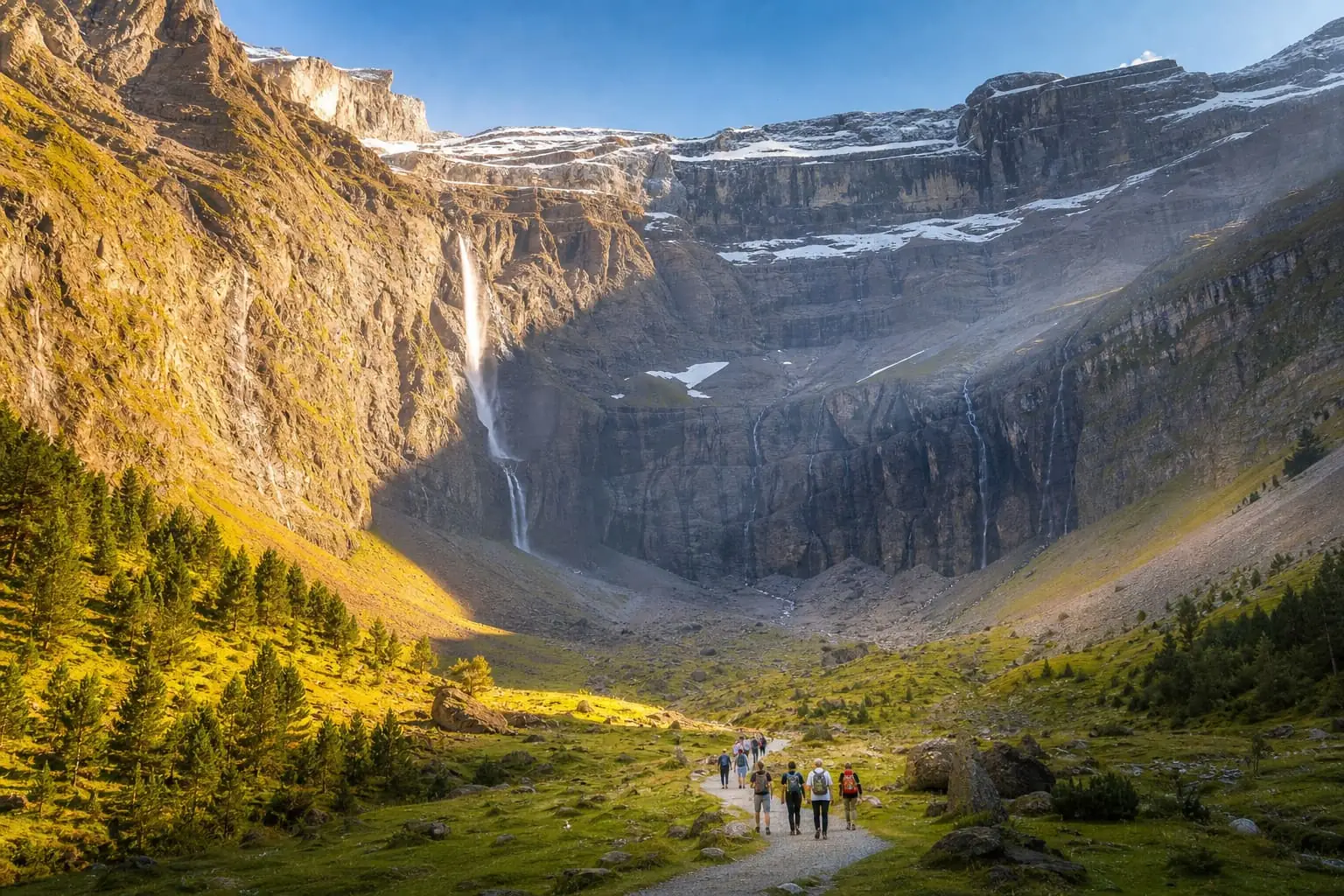
The connection between Gavarnie and Lourdes is geographical and spiritual. Both sites are in the valley of the Gave de Pau: Lourdes at its lower end where the river meets the plain, Gavarnie at its upper end where the river is born from glacial meltwater at the base of a 1,700-metre semicircle of rock. The Cirque de Gavarnie — the French word cirque describes a glacial amphitheatre — is a natural cathedral on a scale that no human architect has matched. Its walls of rock rise vertically from the valley floor, capped by permanent snowfields and pierced by the Grande Cascade, Europe's highest waterfall at 422 metres, which drops in a single unbroken fall before dissolving into the cloud of spray that fills the Cirque. Victor Hugo called it a marvel; mountaineers call it a cathedral; pilgrims who have come from the Grotto call it an extension of the same encounter.
Getting There from Lourdes
Gavarnie is approximately 50 kilometres from Lourdes by road — an hour and a half by car following the D921 south along the Gave de Pau valley. The road is scenic throughout, passing through Luz-Saint-Sauveur and the Gorge de Luz before ascending to the village of Gavarnie. Taxis from Lourdes are available for small groups; shared excursion minibuses operate during the summer season. Organised excursion transfers can be arranged through most Lourdes hotels and through our pilgrimage packages. Public transport (the shuttle bus from Lourdes) operates in season. For groups of ten or more, private coach or minibus hire is the most efficient option and typically costs €15–€25 per person return.
The Walk into the Cirque
From the village of Gavarnie, a well-maintained path leads into the Cirque, approximately 4 kilometres each way on a gentle gradient that is suitable for most fitness levels, including older pilgrims with good mobility. The path follows the course of a mountain stream, passing through meadows of wildflowers in summer and under increasingly dramatic rock walls as the Cirque closes around you. The walk takes approximately 1.5 hours each way at a gentle pace. At the base of the Grande Cascade — a destination marked on most maps as "the Hotel de la Cascade" — you can stand in the spray of Europe's highest waterfall, look up at the cliff face rising 1,700 metres above, and understand why Victor Hugo was at a loss for words. Horses can be hired in the village for those unable to walk the full circuit.
The Village of Gavarnie
The village of Gavarnie itself is a small mountain community of under 200 permanent residents, its economy built around shepherding and the summer tourism that the Cirque generates. The village has several mountain inns and restaurants serving Pyrenean mountain food — tartiflette, confit de canard, local cheese — and a small pilgrim chapel that has welcomed travellers since medieval times when Gavarnie was a stopping point on the pilgrimage route to Santiago de Compostela. The GR10 long-distance walking route passes through the village. Pilgrims who wish to extend their excursion can stay overnight in Gavarnie and walk back into the Cirque at dawn, when the light on the rock walls is extraordinary and the Cascade's spray catches the early sun in a rainbow.
The Spiritual Dimension
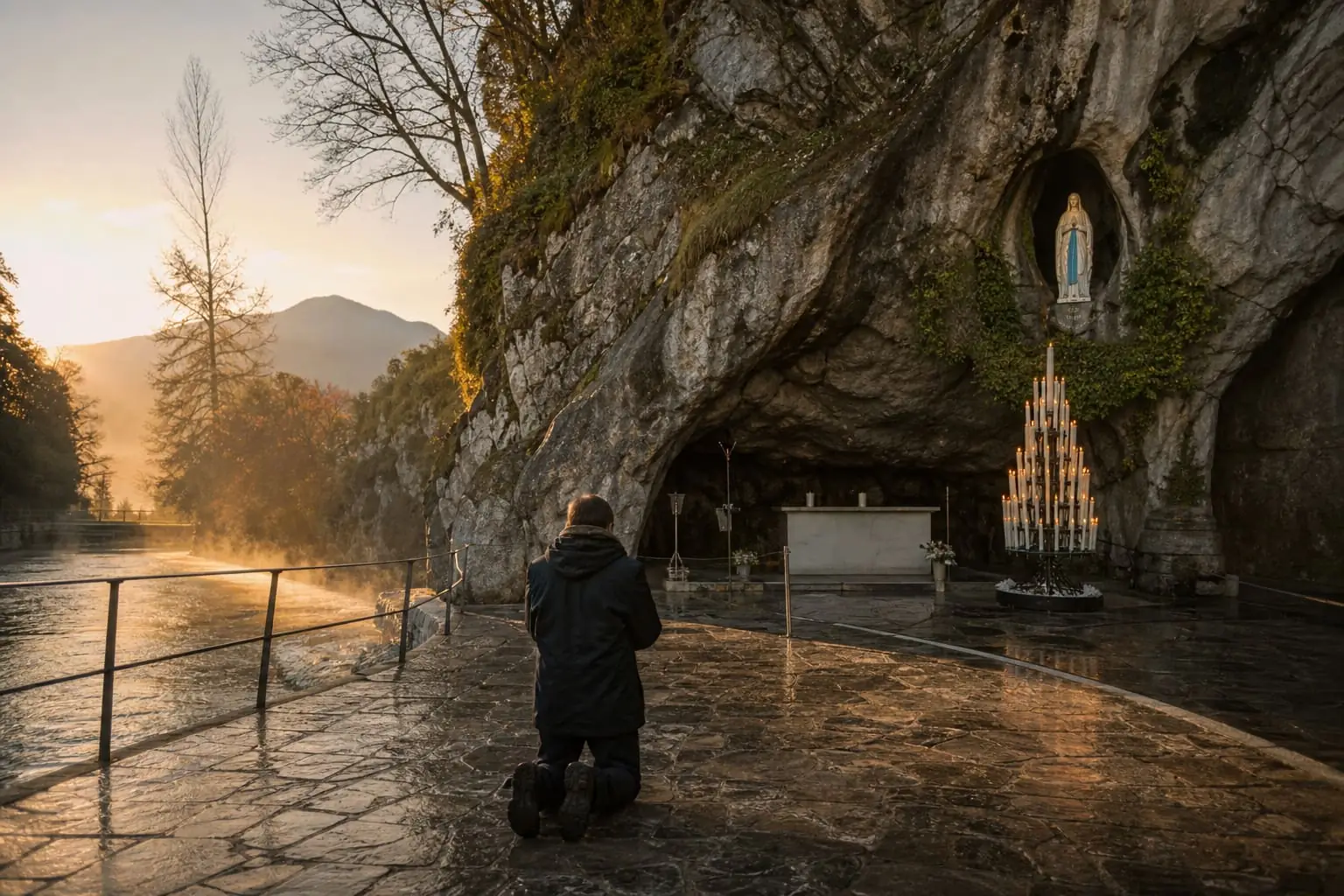
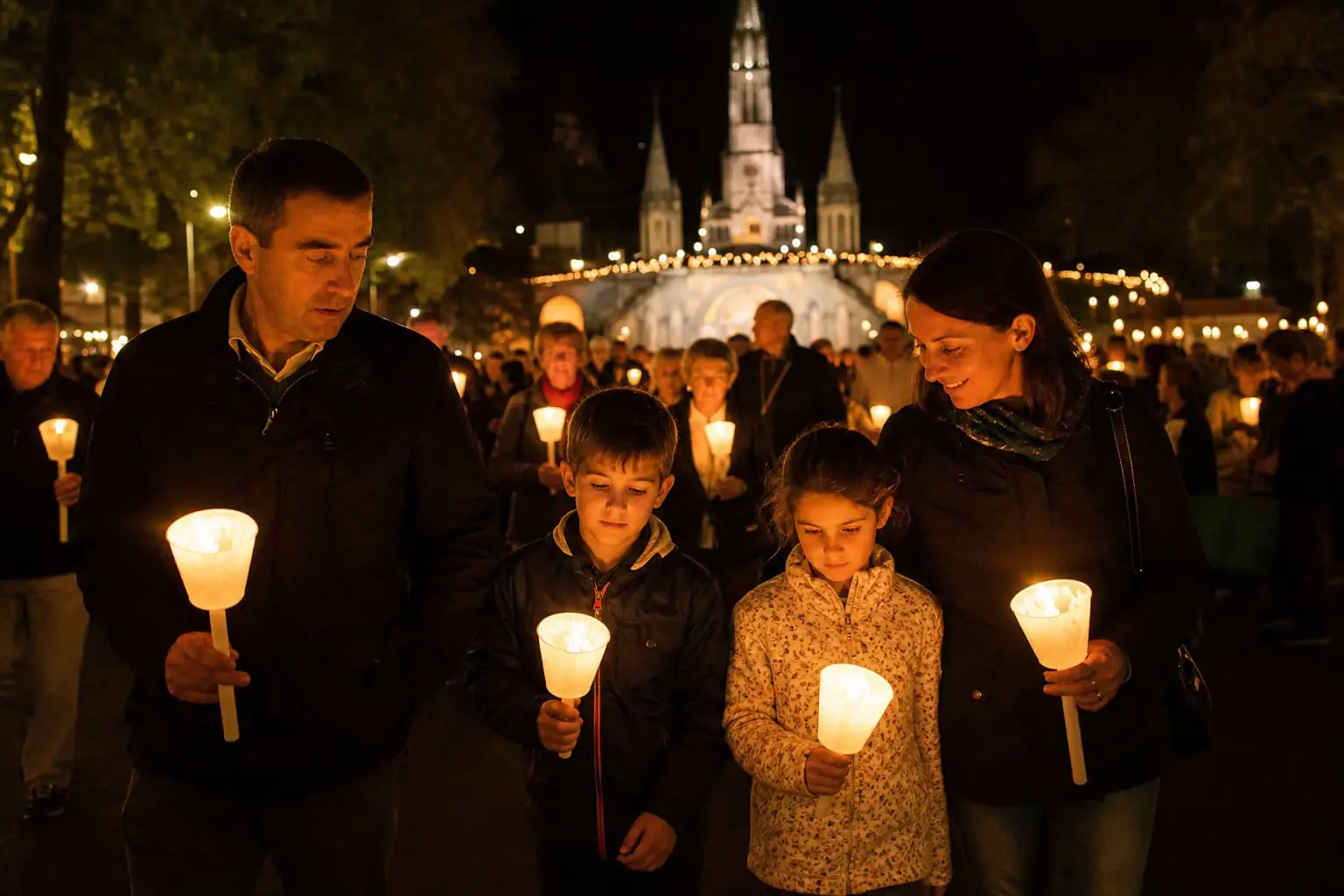
For pilgrims, the walk from the Sanctuary into the mountains has an interior dimension that is worth articulating. At Lourdes, the spiritual encounter is intimate, personal and sacramental: the Grotto, the spring, the Baths, the candlelit procession. At Gavarnie, the encounter is vast, impersonal and overwhelmingly natural: rock, water, sky, and silence on a scale that dwarfs every human construction. The movement between these two registers — from intimate encounter to cosmic vastness and back — mirrors the movement of prayer itself, from petition and surrender to awe and return. Pilgrims who walk into the Cirque and stand beneath the Cascade often find that prayer comes without effort in that setting, stripped of words by the sheer scale of what surrounds them.
Best Time of Year and Practical Notes
Gavarnie is accessible from June to September in normal years; the road and path may be snow-covered before June and after October. July and August bring the most visitors and the most accessible conditions; June and September offer excellent weather with fewer crowds on the path. The village fills up in high summer, so if you plan to eat lunch there, book a table in advance or bring a picnic. Wear walking shoes with ankle support (the path is stony in places) and bring waterproof layers — the spray from the Grande Cascade can be intense on windy days. Start the walk no later than 11:00 if you wish to return to Lourdes in time for the 17:00 Eucharistic Procession.
Ready to plan your Lourdes pilgrimage?
Our team will build a personalised itinerary and send you a free quote within 1 hour.
Request Free Quote