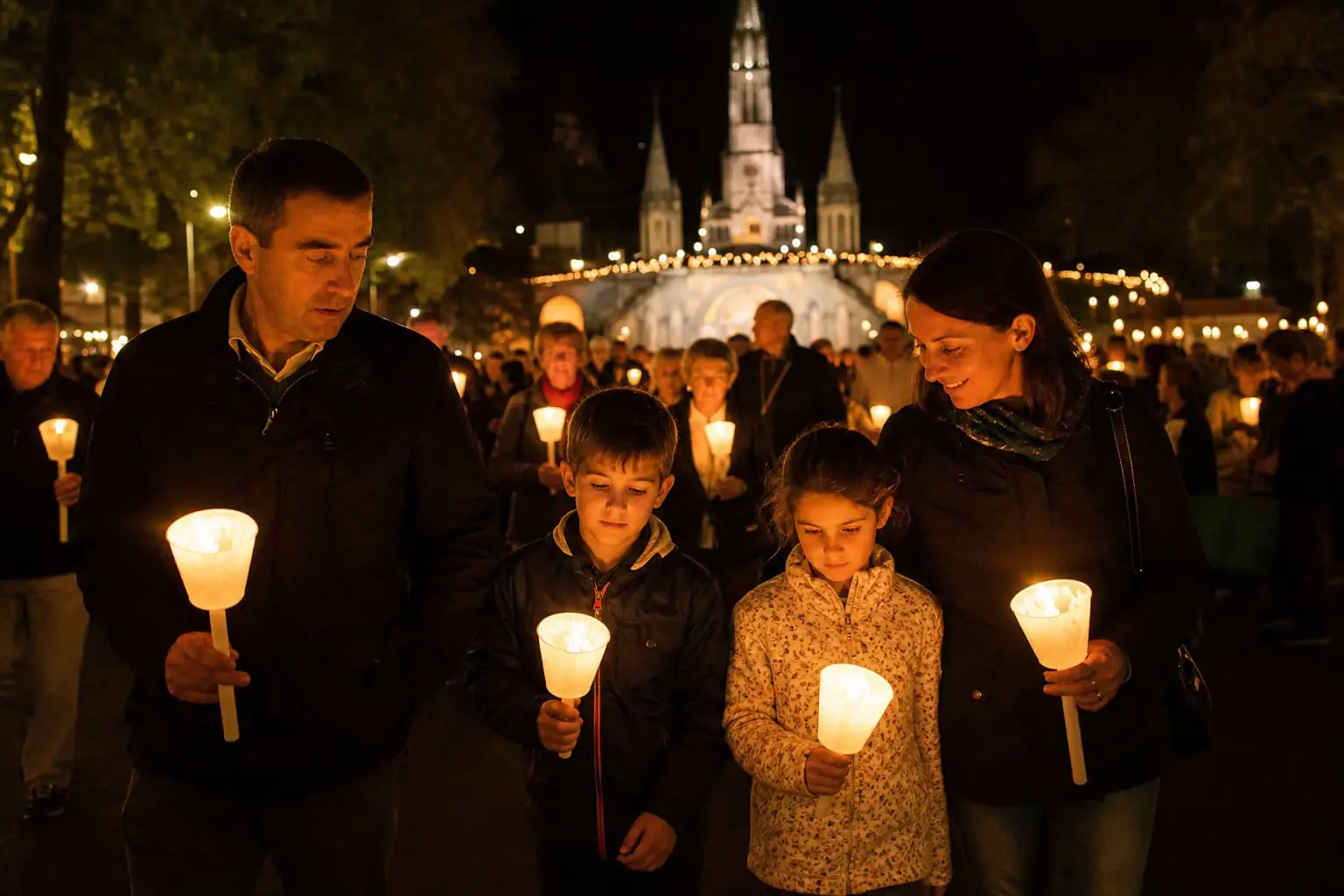
There is a reason that the confessional queues at Lourdes are among the longest in the Catholic world. Something about this place — the Grotto, the spring, the proximity of the suffering and hope of millions — creates in pilgrims a profound desire to be reconciled, to begin again, to lay down whatever they have been carrying. Our Lady's message to Bernadette included an explicit call to penance. The Sacrament of Reconciliation is the Church's fullest response to that call, and Lourdes provides the conditions for it more generously than almost anywhere on earth.
The Chapel of Reconciliation
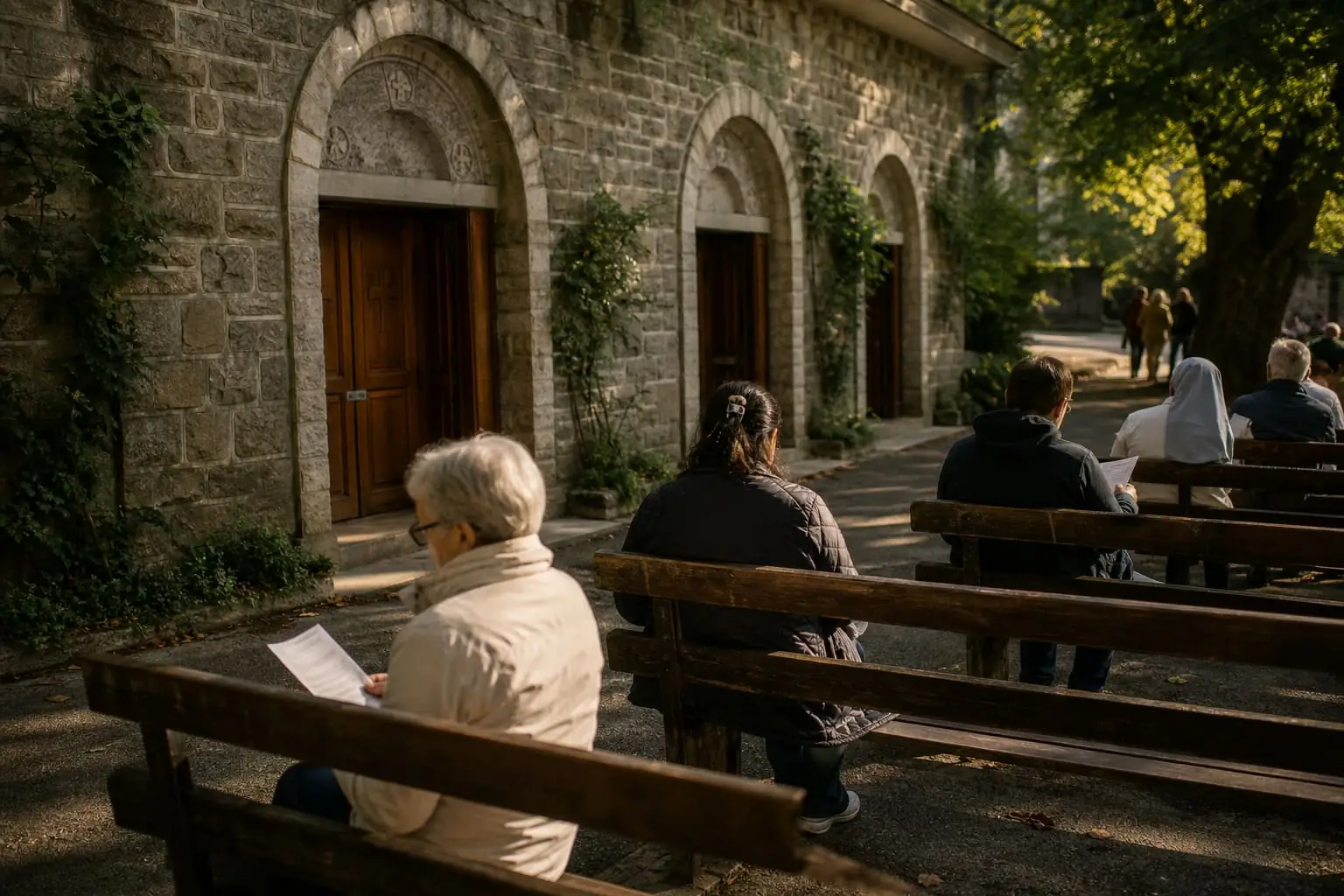
The Chapel of Reconciliation is located within the Sanctuary Domain, a short walk from the Grotto. It is open 24 hours a day throughout the pilgrimage season and offers confessors in more than twenty languages, including English, French, Spanish, Italian, German, Polish, Portuguese, Dutch and many others. The chapel consists of a simple antechamber for waiting and preparation, individual confession rooms with face-to-face or screen options, and a small garden for prayer before and after. The confessors are priests assigned by the Sanctuary from across the world, experienced in the particular ministry of welcoming pilgrims who may not have received the sacrament for years — or decades.
Why Lourdes Is an Ideal Place for Confession
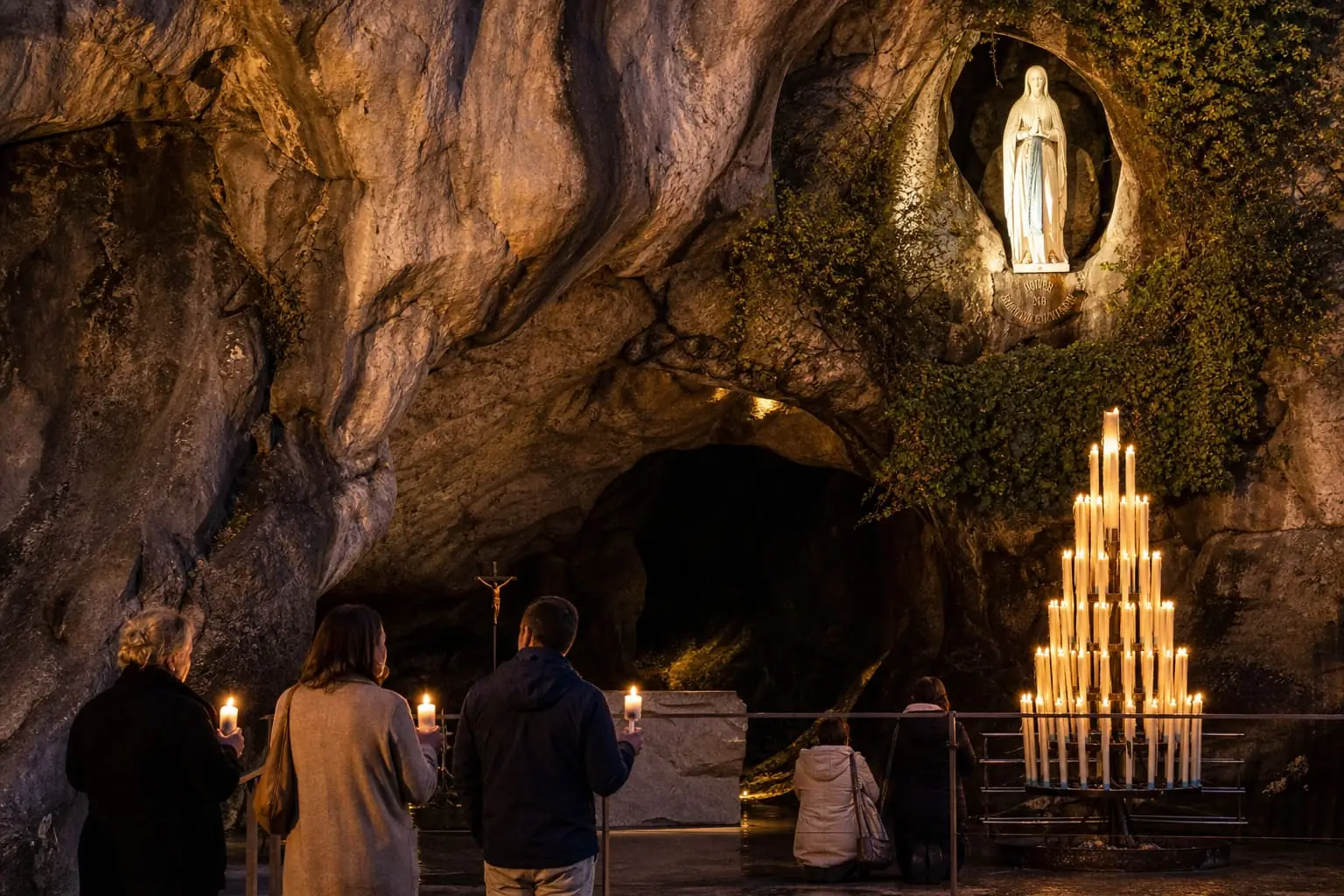
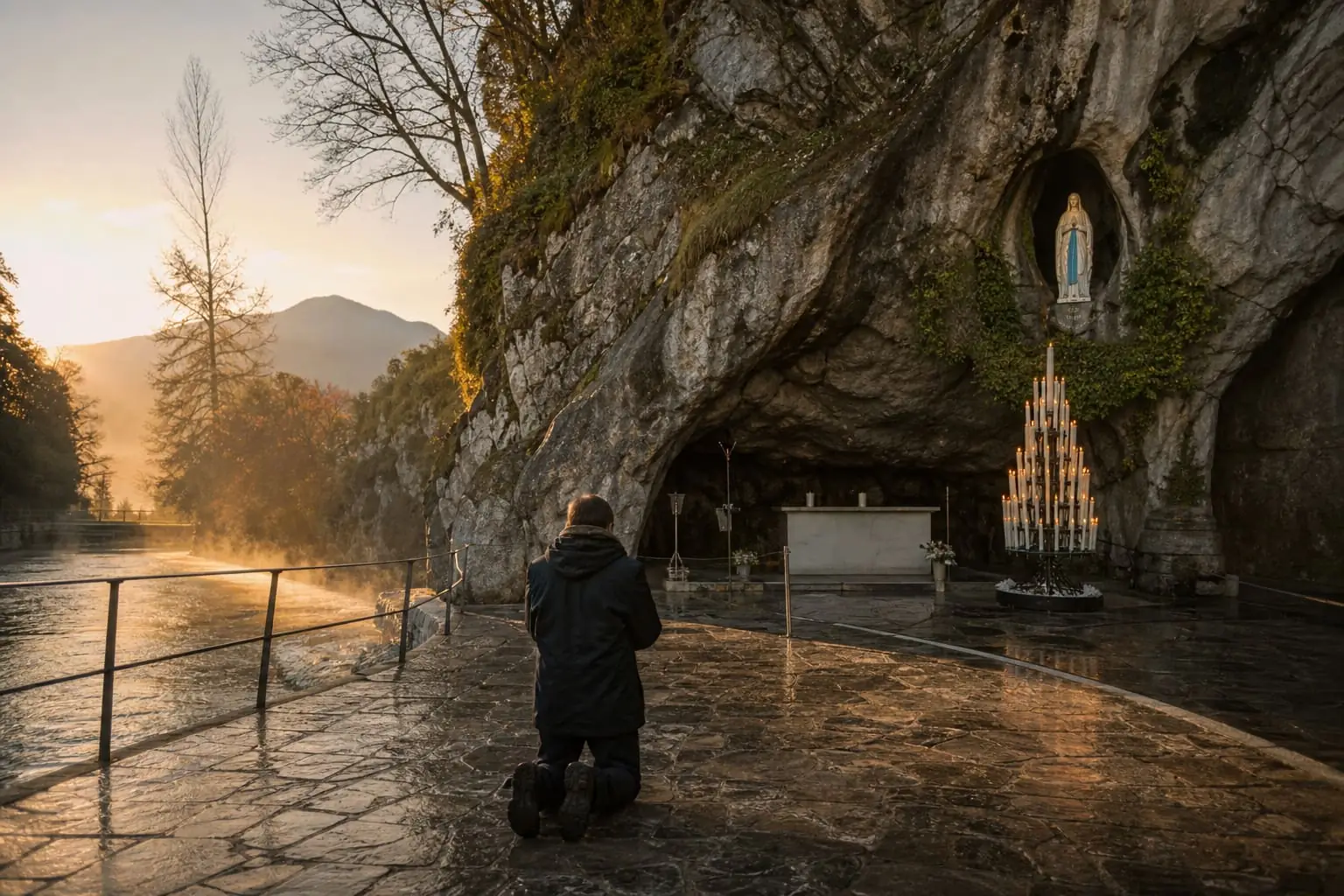
Many pilgrims who have not been to Confession in years — sometimes for very long periods — find that Lourdes provides the courage and the context to return. There are several reasons. The anonymity of being far from home removes social awkwardness. The atmosphere of the Sanctuary creates a spiritual readiness that ordinary parish life rarely produces. The multilingual confessors are specifically chosen for their pastoral gentleness. And the Grotto itself, just steps away, functions as a preparation: sitting in prayer at the cave where Bernadette was asked to do penance creates a natural interior movement toward the sacrament. Lourdes does not judge. It welcomes.
Preparing an Examination of Conscience
Preparation for Confession at Lourdes does not need to be lengthy or elaborate. A simple examination of conscience — reflecting honestly on how you have acted toward God, toward others, and toward yourself since your last Confession — is sufficient. The Sanctuary provides printed examination of conscience guides at the chapel entrance in multiple languages. You do not need to be able to name every sin with precision; what is required is honesty and the desire to change. For pilgrims who have been away from Confession for a long time, a general Confession covering the period since their last reception of the sacrament is both acceptable and often deeply liberating.
What to Expect in the Confessional at Lourdes
A confessor at Lourdes will welcome you warmly, listen to your Confession, offer any pastoral guidance appropriate to your situation, assign a penance, and give absolution. The entire process typically takes five to fifteen minutes, longer for pilgrims with complex situations or those receiving the sacrament for the first time. You may choose the face-to-face setting or the traditional screen; both are available. If you are nervous, simply tell the confessor at the outset: "I haven't been to Confession in a long time and I'm not sure how to begin." In thirty years of combined pilgrimage experience, our team has never encountered a confessor at Lourdes who responded to this with anything other than patience and kindness.
The Spiritual Effect Described by Pilgrims
Pilgrims who receive Confession at Lourdes describe its effects with unusual consistency: a sense of lightness, as if something heavy has been set down; clarity, as if the air has changed; and, frequently, an ability to pray at the Grotto afterward that was not available before. One pilgrim described it as "finally being present in a place I had been visiting physically for two days." Confession does not produce the Grotto experience. But it removes interior obstacles to it. Bernadette's message was penance for a reason: reconciliation is the foundation on which every other grace is received.
Bernadette's Message of Penance and the Sacrament
During the apparitions, Our Lady repeatedly asked Bernadette to call pilgrims to penance — an old word that means not self-punishment but a turning of the heart. Confession is the sacramental expression of exactly this turning. At Lourdes, the relationship between the Grotto and the Chapel of Reconciliation is not incidental: they are two dimensions of the same invitation. Pilgrims who receive Confession near the Grotto often report that the proximity of the two sites creates a coherence — a sense that the message and the sacrament are one unified encounter with mercy. If you can do only one sacramental thing at Lourdes, experienced spiritual directors consistently recommend Confession.
Ready to plan your Lourdes pilgrimage?
Our team will build a personalised itinerary and send you a free quote within 1 hour.
Request Free Quote