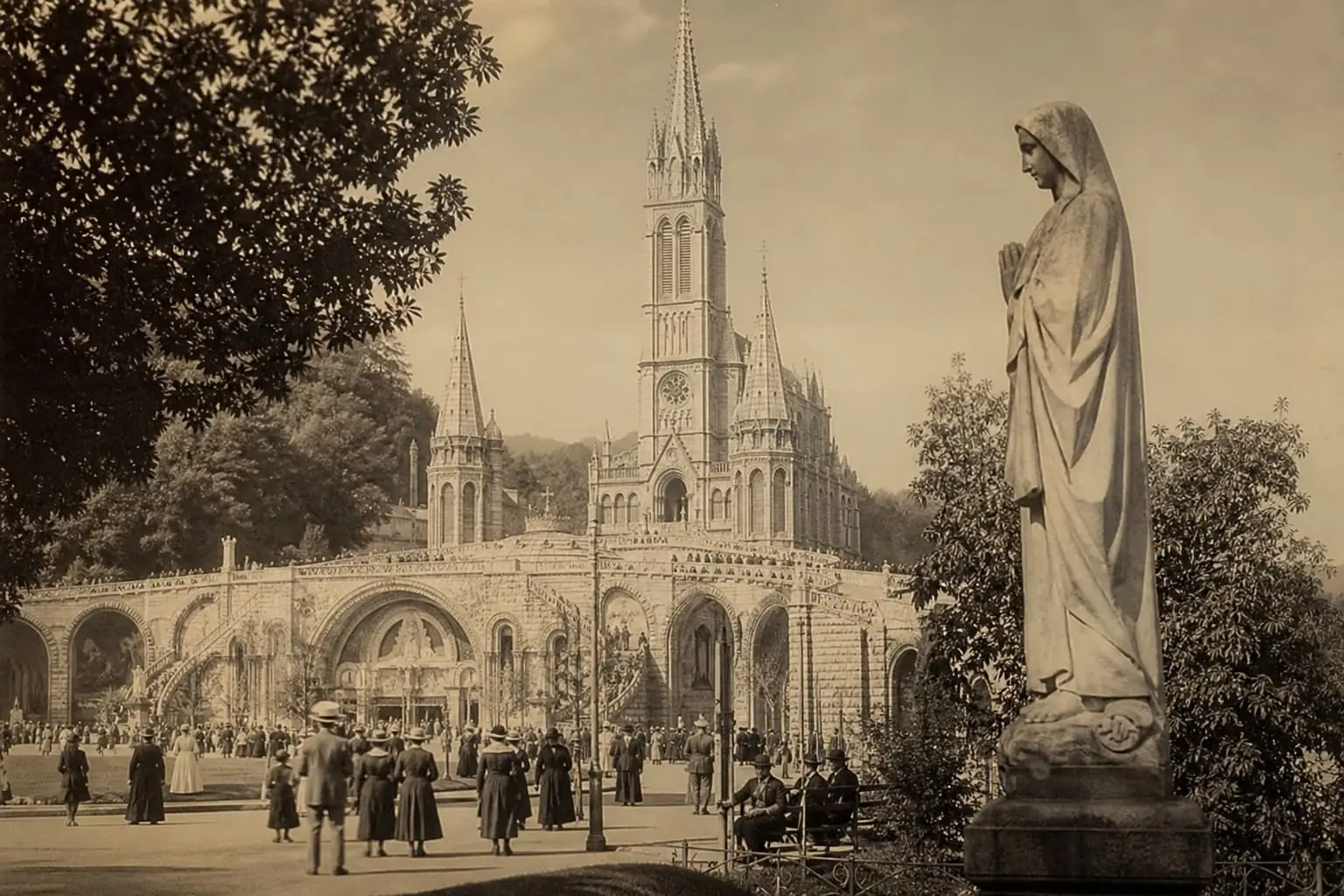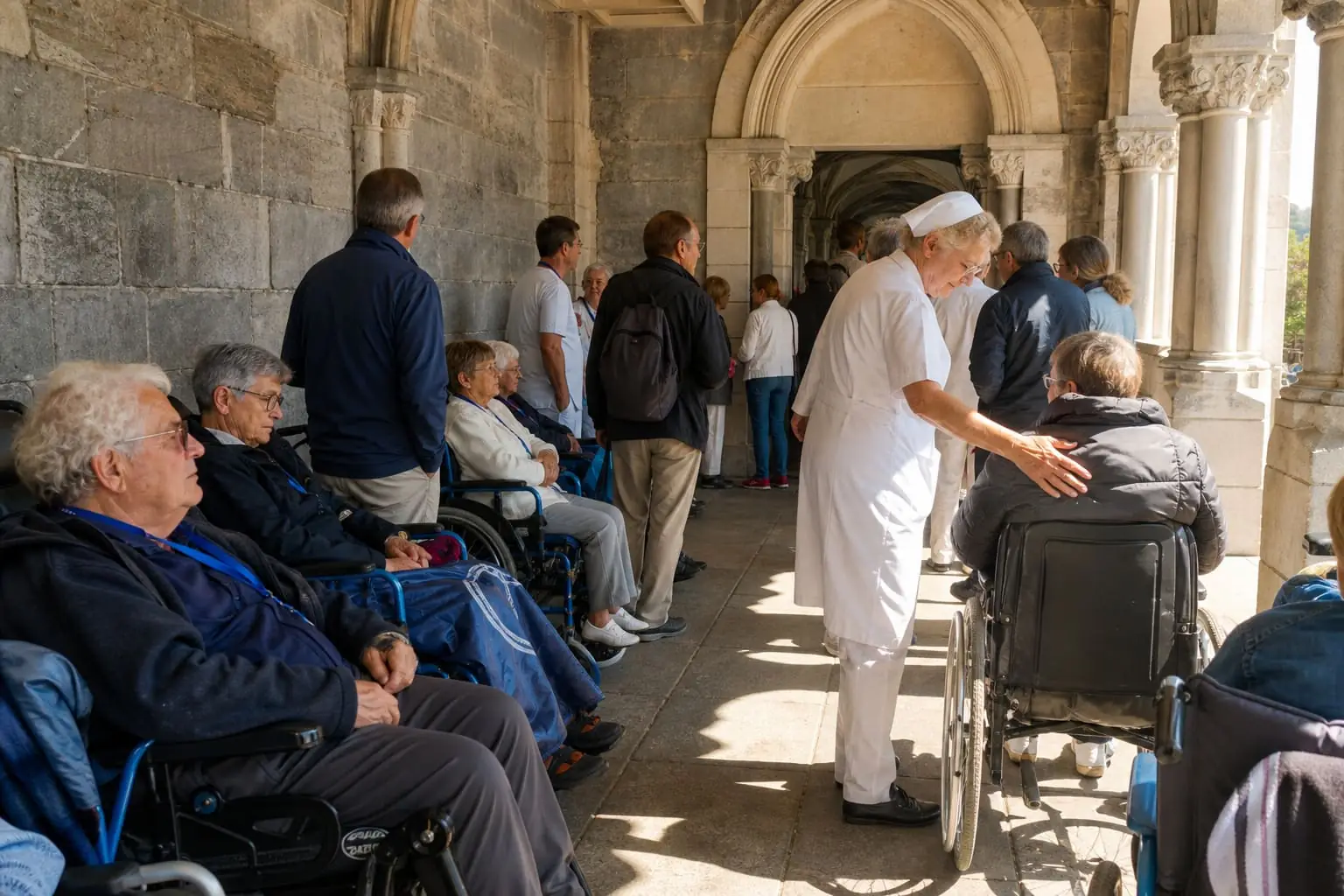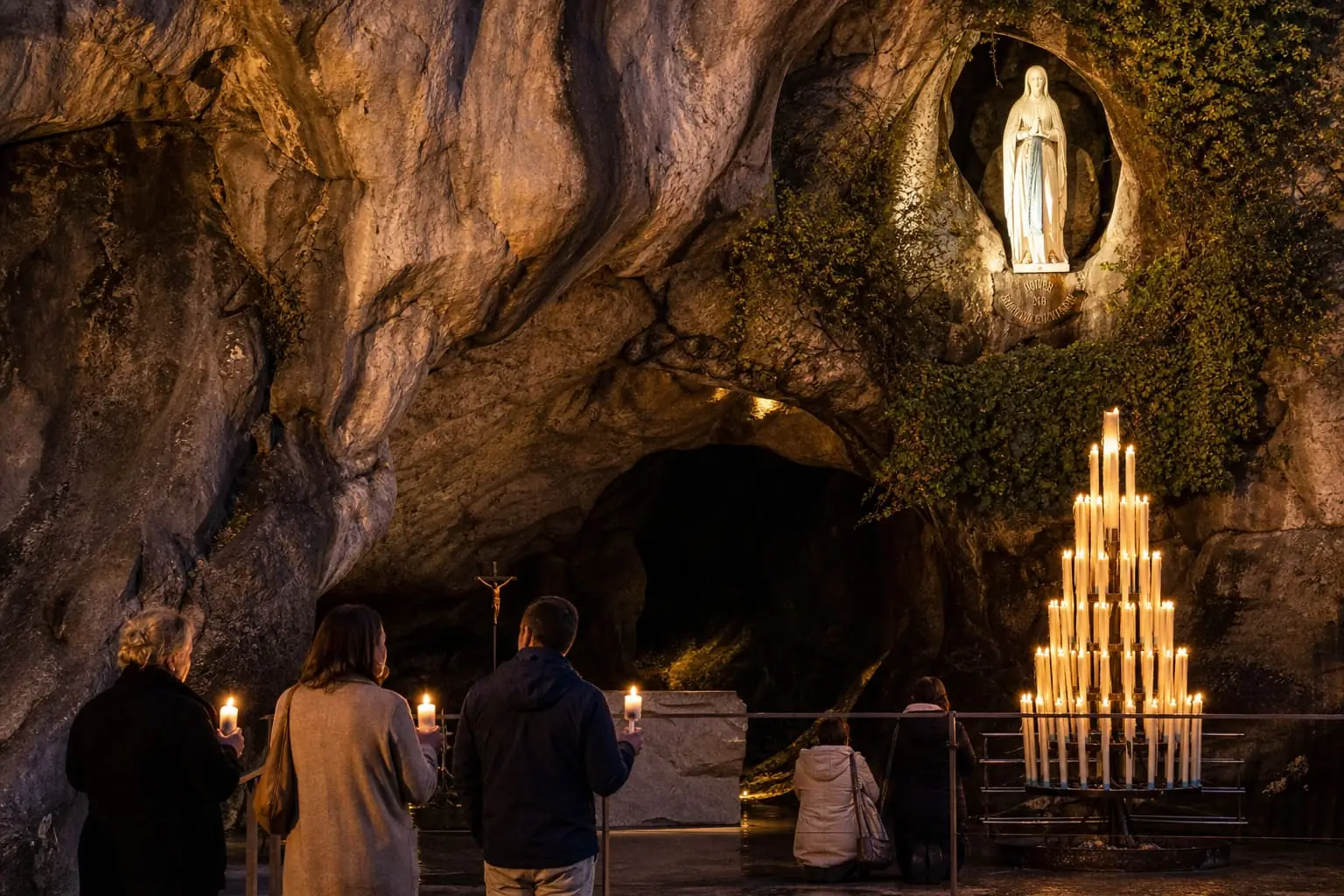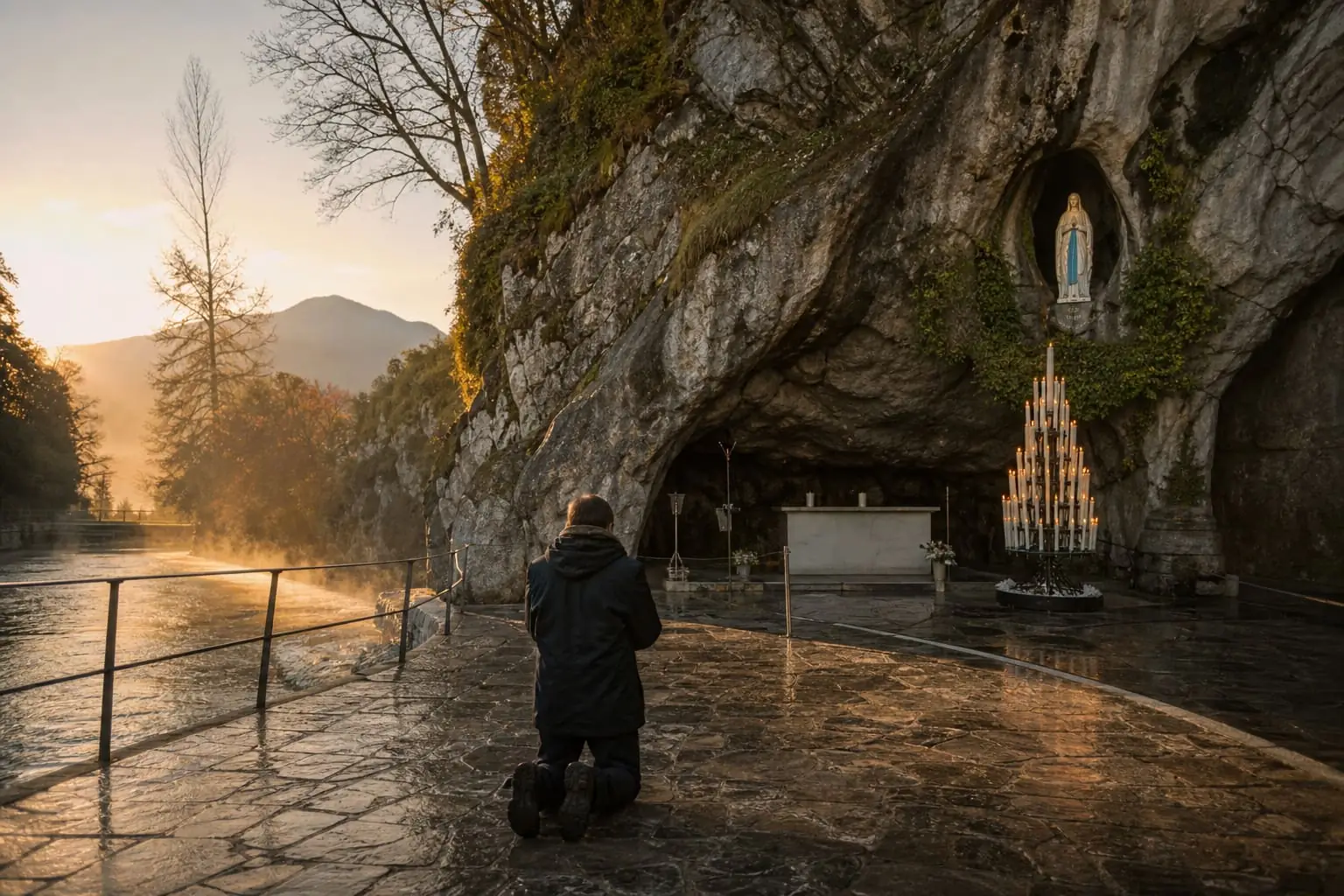
Of all the sacramental experiences available at Lourdes, the Anointing of the Sick may be the one that moves pilgrims most deeply. This is not because it is dramatic — it is in fact quiet, intimate and brief — but because it meets suffering with sacramental grace in a way that few other encounters can. At Lourdes, where the sick hold the place of honour and where the entire Sanctuary is oriented around healing in its broadest sense, the Anointing of the Sick takes on a resonance and depth that is often more powerful than in any other setting.
What the Sacrament Is and What It Does
The Anointing of the Sick is one of the seven sacraments of the Catholic Church. It is administered to those facing serious illness, surgery, old age or significant mental suffering. The sacrament involves anointing with blessed oil on the forehead and hands, accompanied by prayer, and is administered by a priest. Its effects, according to Catholic teaching, include spiritual strength and peace, the forgiveness of sins, and, where God wills it, restoration of physical health. It is not "last rites" — a persistent misconception — and is not reserved for those near death. Many pilgrims receive it multiple times during their lives in periods of serious illness or significant suffering.
Who Qualifies at Lourdes
At Lourdes, the Anointing of the Sick is available to any Catholic who is elderly, seriously ill, awaiting surgery, living with a serious chronic condition, or experiencing profound mental or psychological suffering. The Church's guidance is deliberately broad: the sacrament is for those for whom health is a serious concern, not only those who are imminently dying. At Lourdes specifically, the scope is if anything broader still, reflecting the Sanctuary's understanding that pilgrims carry many kinds of illness and many kinds of burden. If you are uncertain whether you or a family member qualifies, speak to the chaplain accompanying your group or to a priest at the Chapel of Reconciliation.
The Group Ceremony at the Sanctuary
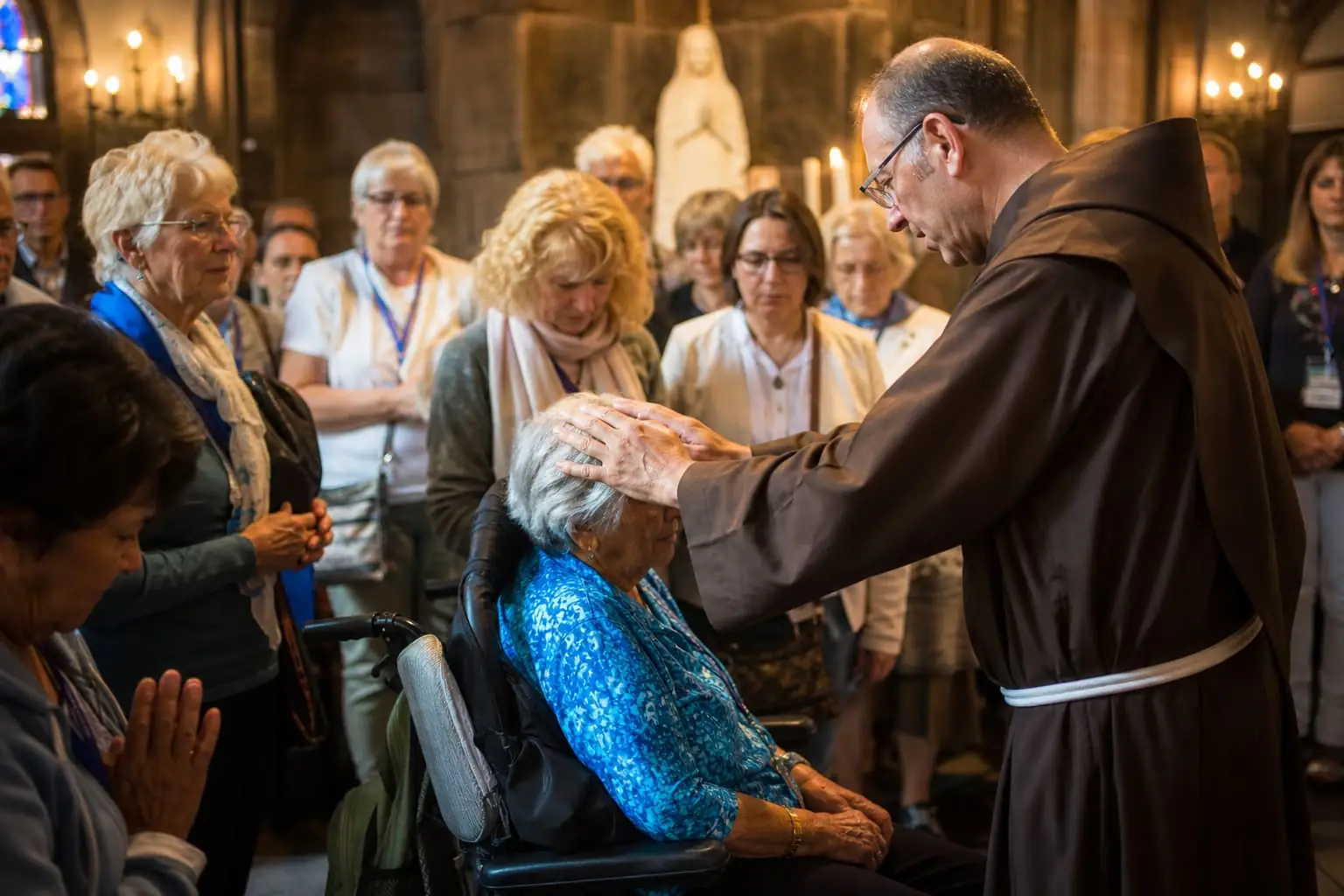
The Anointing of the Sick at Lourdes is typically administered in a group ceremony, often within the context of a pilgrimage group's private Mass or at one of the dedicated ceremonies organised by the Sanctuary for sick pilgrims. The atmosphere is profoundly pastoral: gentle music, simple liturgy, and priests moving through the assembly to anoint each person individually. The group setting does not diminish the intimacy of the encounter; if anything, it intensifies it, as each person receives the sacrament in the company of others who are similarly carrying illness and hope. For pilgrims who have not received the Anointing of the Sick before, the experience is often unexpectedly moving.
The Role of the Chaplain
The priest accompanying your pilgrimage group plays a central role in the administration of the Anointing of the Sick. A good chaplain will meet with sick pilgrims individually before the ceremony, explain what will happen, invite each person to share something of what they are carrying, and create a context of prayer and trust. The sacrament itself is brief — perhaps two to three minutes per person — but the preparation and the pastoral conversation around it are equally important. If you are travelling without a chaplain, the Sanctuary's own priests are available throughout the season to administer the sacrament; enquire at the Sanctuary information office.
How Family Members Participate
Family members and carers accompanying a sick pilgrim are integral to the Anointing of the Sick ceremony. They may stand or sit alongside the person receiving the sacrament, hold their hand, and participate in the surrounding prayers. Many family members report that witnessing the Anointing of their loved one is among the most significant moments of the entire pilgrimage — sometimes more so than their own experiences at the Baths or the Grotto. The sacrament creates a space in which illness is not denied or minimised but acknowledged, named, and placed in God's hands — an act that brings relief to carers and family members who often carry as much weight as the sick person themselves.
What Pilgrims Commonly Experience Afterward
Pilgrims who receive the Anointing of the Sick at Lourdes describe a wide range of responses. Some feel immediate peace — a lifting of anxiety they had been carrying for months. Some feel nothing in the moment but notice over the following days a change in their interior landscape: less fear, more acceptance, a deepened sense that they are not alone in their suffering. A small number report physical improvements they cannot explain. All of these responses are valid, and none is required. The sacrament's effects are God's to determine, not ours to produce. What pilgrims almost universally agree on is that they were glad they received it.
Ready to plan your Lourdes pilgrimage?
Our team will build a personalised itinerary and send you a free quote within 1 hour.
Request Free Quote